Zone-based audio distribution
Sources, paging microphones, routing, amplification, loudspeakers and supervision.

Complete professional audio signal path
PNSS designs public address, DSP, assistive listening, installed pro sound and conferencing audio around speech intelligibility, coverage, control and dependable operation.

Choose by listening need
Start with the result people need—not the amplifier, mixer or speaker brand.
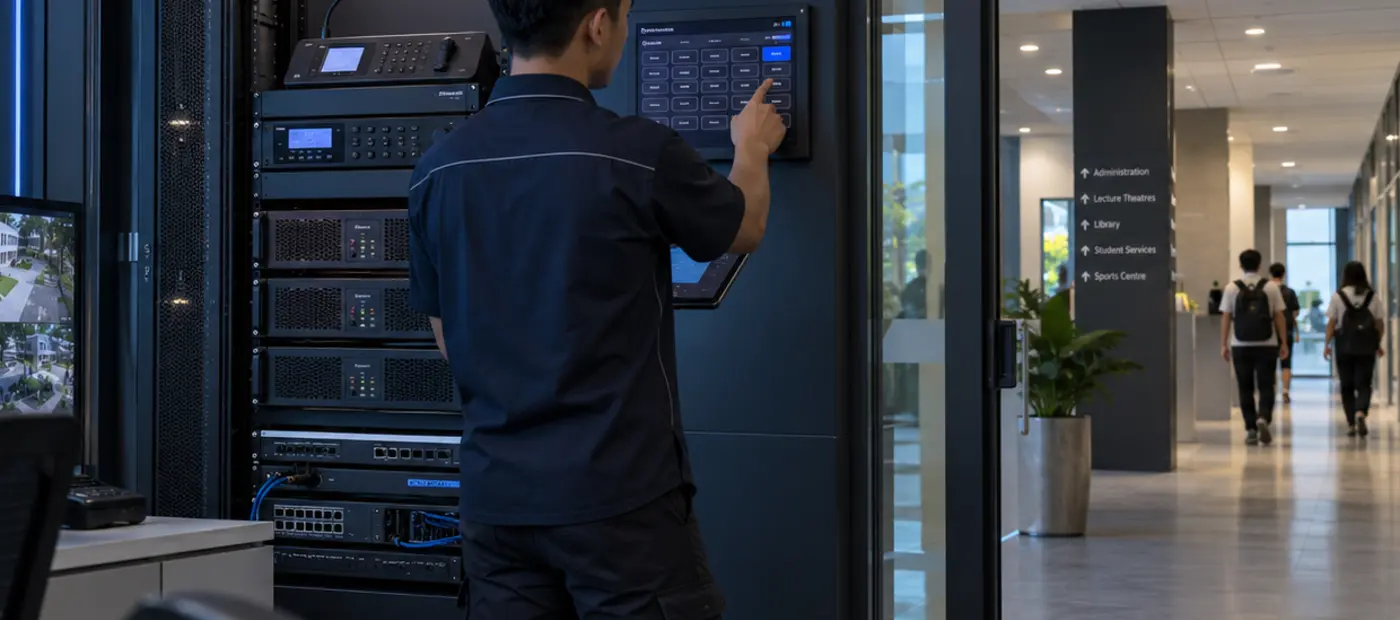 01 · Public communicationPA, paging & BGM
Announcements and music across selected zones.
Best for campuses, offices and public facilities →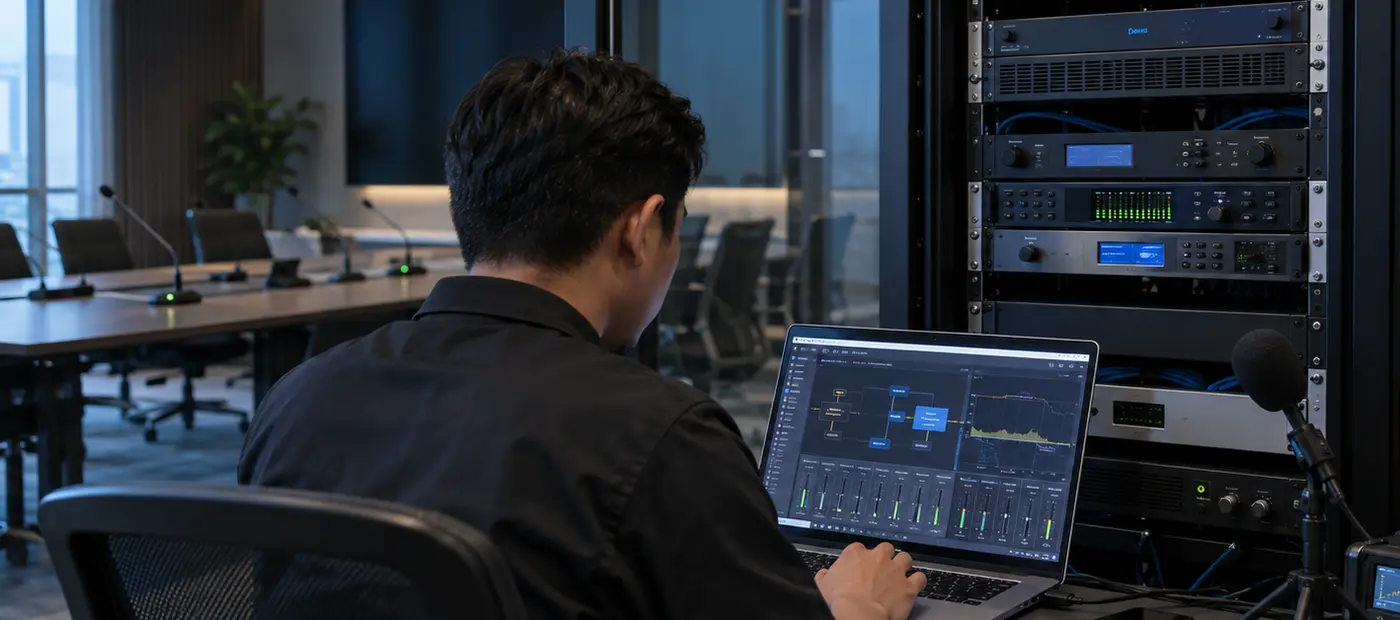 02 · Signal intelligenceDSP & audio control
Routing, automixing, echo control and presets.
Best for complex rooms and multi-zone systems →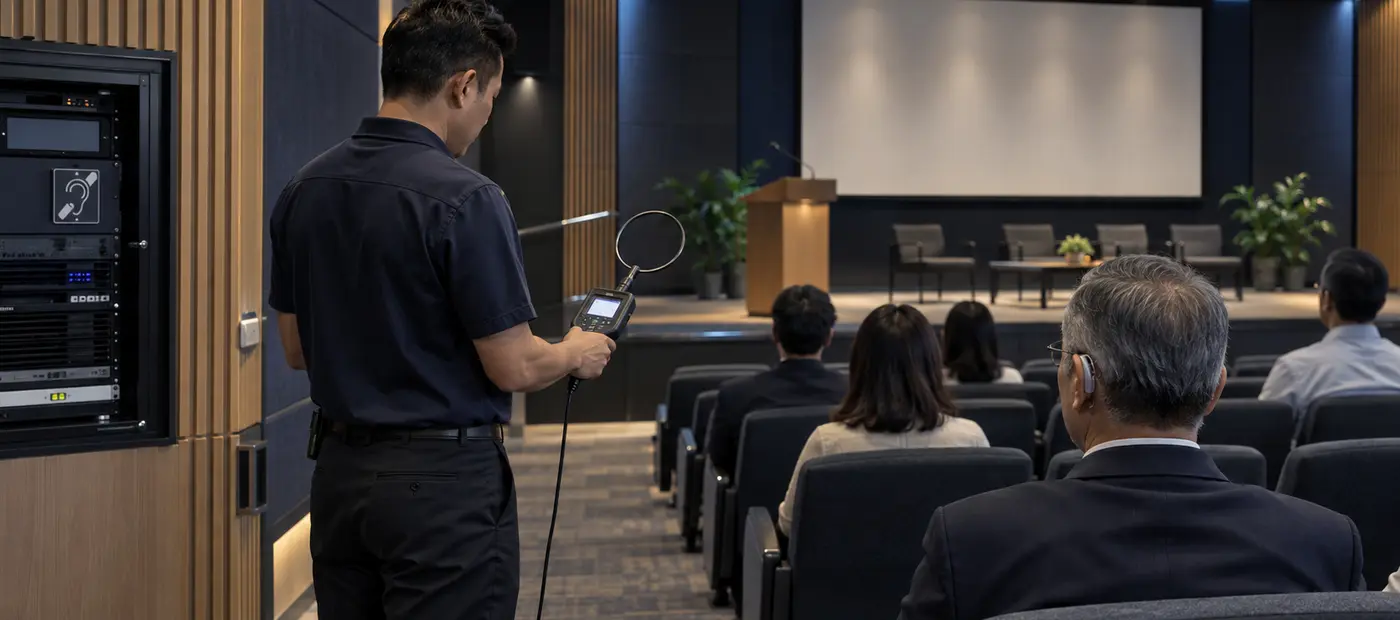 03 · Accessible listeningInduction loop
Clearer sound delivered to compatible hearing devices.
Best for counters, meeting rooms and venues → 04 · Performance audioInstalled pro sound
Speech and music reinforcement for an audience.
Best for halls, stages and multipurpose venues → 05 · Two-way conversationConference audio
Microphone pickup, AEC and room loudspeakers.
Best for boardrooms, training and hybrid teaching →More than a mixer
These systems may connect, but they solve different problems. PNSS separates communication, processing, accessibility, performance and conversation requirements before selecting equipment.
Live, scheduled and priority audio delivered to the correct zones with suitable coverage and control.
Sources, paging microphones, routing, amplification, loudspeakers and supervision.
Information reaches the intended areas without unnecessary disturbance elsewhere.
Routine paging, background music, events and approved priority messages.
For school-specific separation of School bell and time system, Time distribution system and Professional PA system, use the dedicated system guide.
Open the PA product guide ↗Routing, mixing, automixing, equalisation, echo cancellation, control and monitoring tailored to the room.
A DSP manages audio paths, levels, logic, echo control and user interfaces.
Correct processing improves intelligibility, consistency and system control.
For conference rooms, training spaces, halls and networked audio systems.
DSP selection depends on analogue and network I/O, AEC channels, control needs and future expansion.
Discuss DSP requirements ↗Audio-frequency induction loops send speech and programme audio directly to compatible hearing devices.
Loop driver and cable transmit the audio signal to a compatible hearing aid or implant.
Direct transmission can improve speech clarity for users with hearing loss.
At counters, meeting rooms, lecture halls, venues and houses of worship.
A normal loudspeaker amplifier cannot substitute for a correctly designed induction-loop driver.
Discuss an induction loop ↗Sound reinforcement for speech, music and programme content across stages, halls and multi-purpose venues.
Inputs, mixing, processing, amplification and loudspeaker coverage for the venue.
The audience should hear speech and programme evenly without excessive level.
For live speech, music, playback and multi-purpose venue operation.
Product choice follows audience area, programme type, acoustic conditions and operator skill level.
Discuss pro sound ↗Microphone pickup, echo control, room loudspeakers and conferencing integration for natural conversation.
Microphones, DSP and loudspeakers connect the room to the video-conference platform.
Good audio often determines whether a hybrid meeting feels productive.
For huddle rooms through boardrooms, training spaces and classrooms.
For room-specific Logitech camera and controller selection, use the dedicated room guide.
Open the video room guide ↗Audio acceptance
Listeners receive suitable level and tonal balance across the intended area.
Speech remains understandable under normal room and background-noise conditions.
Users can select the correct source, zone and preset without unsafe complexity.
PNSS audio engineering note
Audio performance is determined by coverage, noise, acoustics, system gain and operating workflow—not only amplifier watts or speaker size. PNSS defines measurable acceptance conditions before the equipment list.
Map where people must hear the system, including seated/standing areas, corridors and secondary zones. Loudspeaker quantity and aiming should follow coverage, not symmetry alone.
Define whether intelligibility, background music quality, performance level or a combination is most important. The design targets and speaker type can differ significantly.
HVAC, crowd noise, reverberation and reflective surfaces affect intelligibility. More volume is not always the correct solution.
Document source priorities, paging zones, emergency override and what happens when multiple users try to access the system.
Conference rooms and complex systems may require processing, echo cancellation, Dante/Q-LAN/AES67 or control integration. Network responsibility should be defined early.
Verify coverage, gain structure, intelligibility, presets, source/zone operation and user handover using the actual room workflow.
AUDIO SYSTEM PATHS
Move from the audio discipline into the related PNSS system guide or supporting solution so you can explore the actual workflow before requesting a design.
See how PNSS combined hardware repair, configuration restoration, network-switch replacement and user acceptance testing.
Continue exploring
PA, voice alarm, induction loop, DSP and room audio have different design priorities; keep the workflow application-led.
Explore modular and integrated PA/voice-alarm architecture.
Explore →SolutionHearing Loop & Audio Induction LoopPlan accessible-listening coverage, integration and commissioning.
Explore →InstallationPA, Pro Sound & AV InstallationInstallation and commissioning for PA, line array, pro sound, hearing loop and connected AV infrastructure.
Explore →Product LibraryProfessional AudioBrowse PA, DSP, induction-loop, pro-sound and conference-audio references.
Explore →GuidePA vs Voice AlarmUnderstand the architectural difference before equipment selection.
Explore →GuideHearing Loop DesignReview loop geometry, metal loss, overspill and commissioning.
Explore →Design the signal path
Sources, zones, users, acoustic conditions and operational priorities should be mapped before products are shortlisted.
Need a side-by-side decision?Use the PNSS comparison guide before finalising the product shortlist.
Compare PA vs voice-alarm architecture →