Programmable timetable audio
Schedules tones or messages by time, day, calendar and approved zone.

Three systems, clearly separated
School bell scheduling, master time synchronisation and PA/paging are three separate solutions. PNSS can connect them where the campus workflow needs shared triggers, zones or priority alerts, but they should not be treated as the same product.
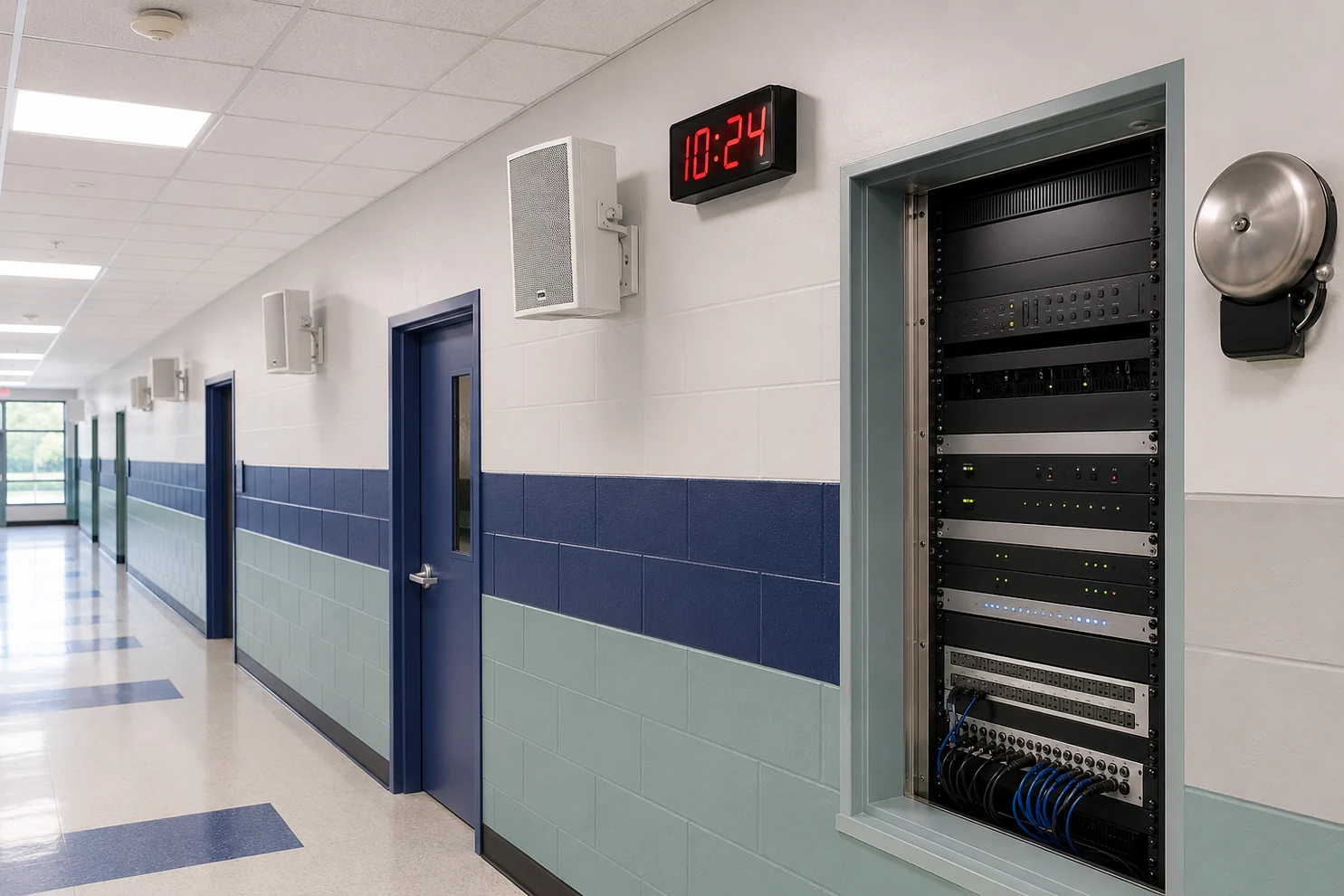
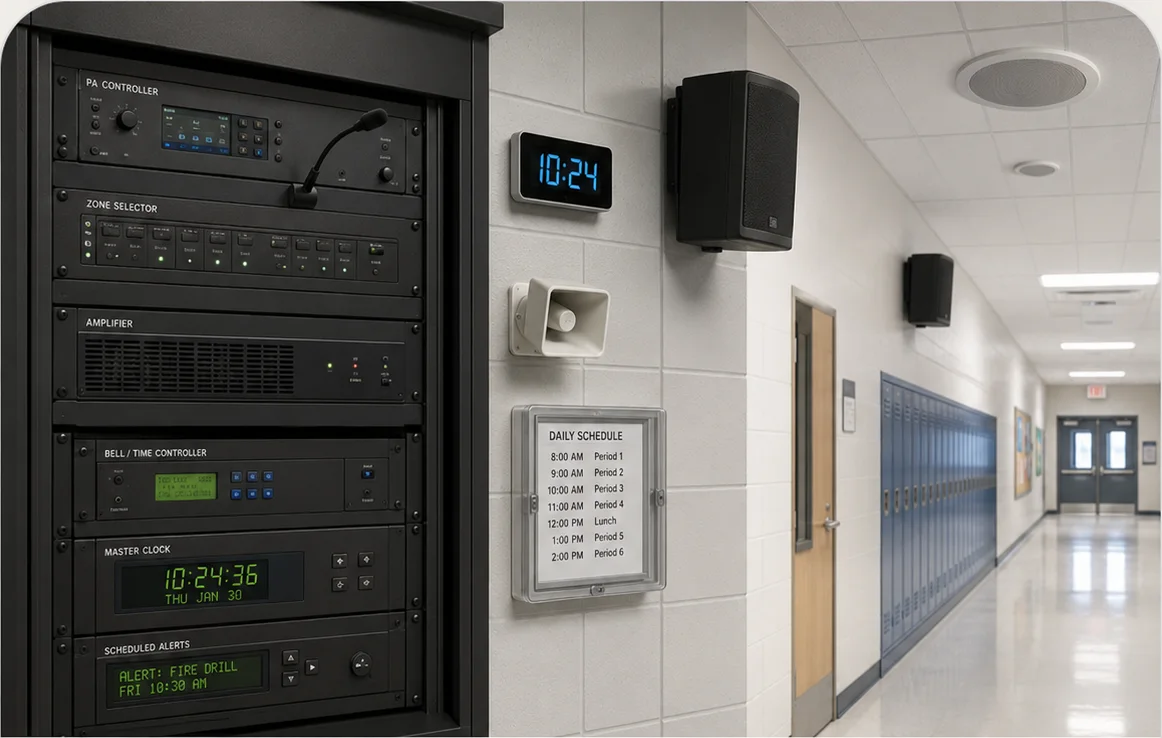
Avoid specification confusion
School bell scheduling automates timetable tones and school-day signals. Master time keeps clocks and time-dependent systems synchronised. PA distributes live announcements, paging, background music and priority messages through the correct zones. PNSS separates the three scopes first, then integrates them only when the campus operation, trigger logic or emergency workflow requires it.
Automated class-change tones, melodies and scheduled messages for different sessions, zones and calendar exceptions.
Product selection depends on IP/wireless infrastructure, indoor or outdoor zones and alert coverage.
Schedules tones or messages by time, day, calendar and approved zone.
Reduces manual intervention and supports different forms, sessions and special days.
Normal teaching days, exams, assemblies, holidays and temporary timetable changes.
Class blocks, corridors, halls, offices and outdoor areas as required.
Configured for controlled scheduling and manual intervention when appropriate.
PNSS audits coverage, network and calendar rules before commissioning each zone.
School audio devices can support announcements, but this does not automatically replace a full campus PA design.
Discuss school bell scheduling ↗
One trusted time reference for analogue or digital clocks and time-sensitive connected systems.
Distribution may use network, wireless or legacy timing methods according to the site.
Synchronises clocks and approved time-dependent systems from a managed source.
Accurate shared time supports lessons, exams, operations and coordinated announcements.
Especially valuable across multiple buildings or sites with many visible clocks.
Offices, halls, corridors, sports spaces and any location needing trusted time.
Everyone sees consistent time while technical staff manage the central reference.
Assessment covers network, cabling, clock types, legacy interfaces and resilience requirements.
Time synchronisation is a separate design discipline even when the same controller platform schedules bells.
Discuss master time systems ↗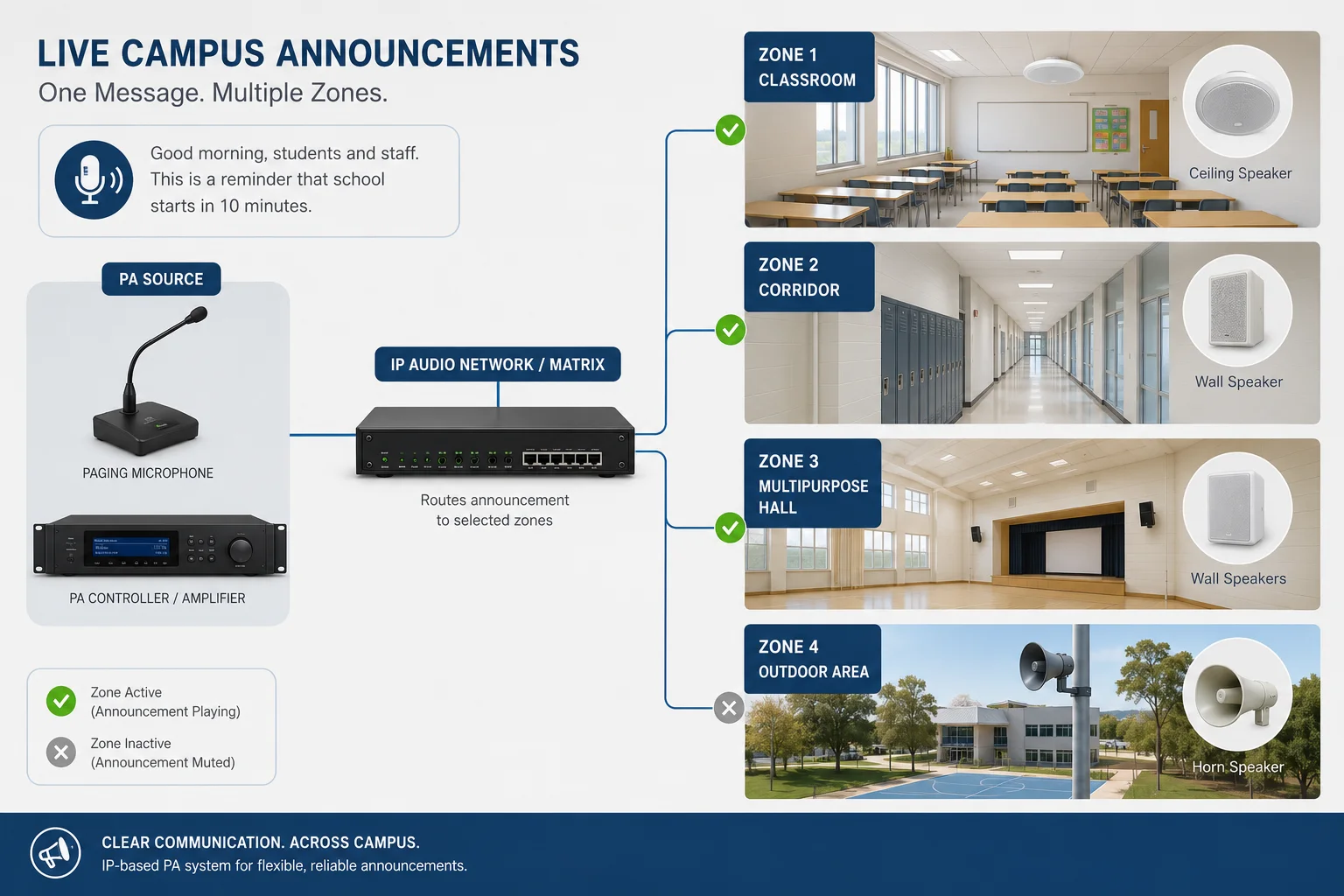
Live announcements and audio distribution through the correct campus zones using conventional, matrix or IP architecture.
Architecture and component selection should follow coverage, priority and resilience requirements.
Microphones, audio sources, routing, amplification, speakers and system supervision.
Announcements should be intelligible, appropriately prioritised and easy to operate.
Daily announcements, assemblies, events, background music and operational messages.
Class blocks, administration, halls, canteens, fields and outdoor circulation areas.
Role-appropriate microphones and controls prevent accidental or unauthorised paging.
PNSS calculates loudspeaker coverage, amplifier loading, routing, priority and backup needs.
Professional PA system is presented as a separate campus audio category; scheduled bell and time functions are planned separately paging capability may still be appropriate in selected bell-system designs.
Discuss Professional PA system ↗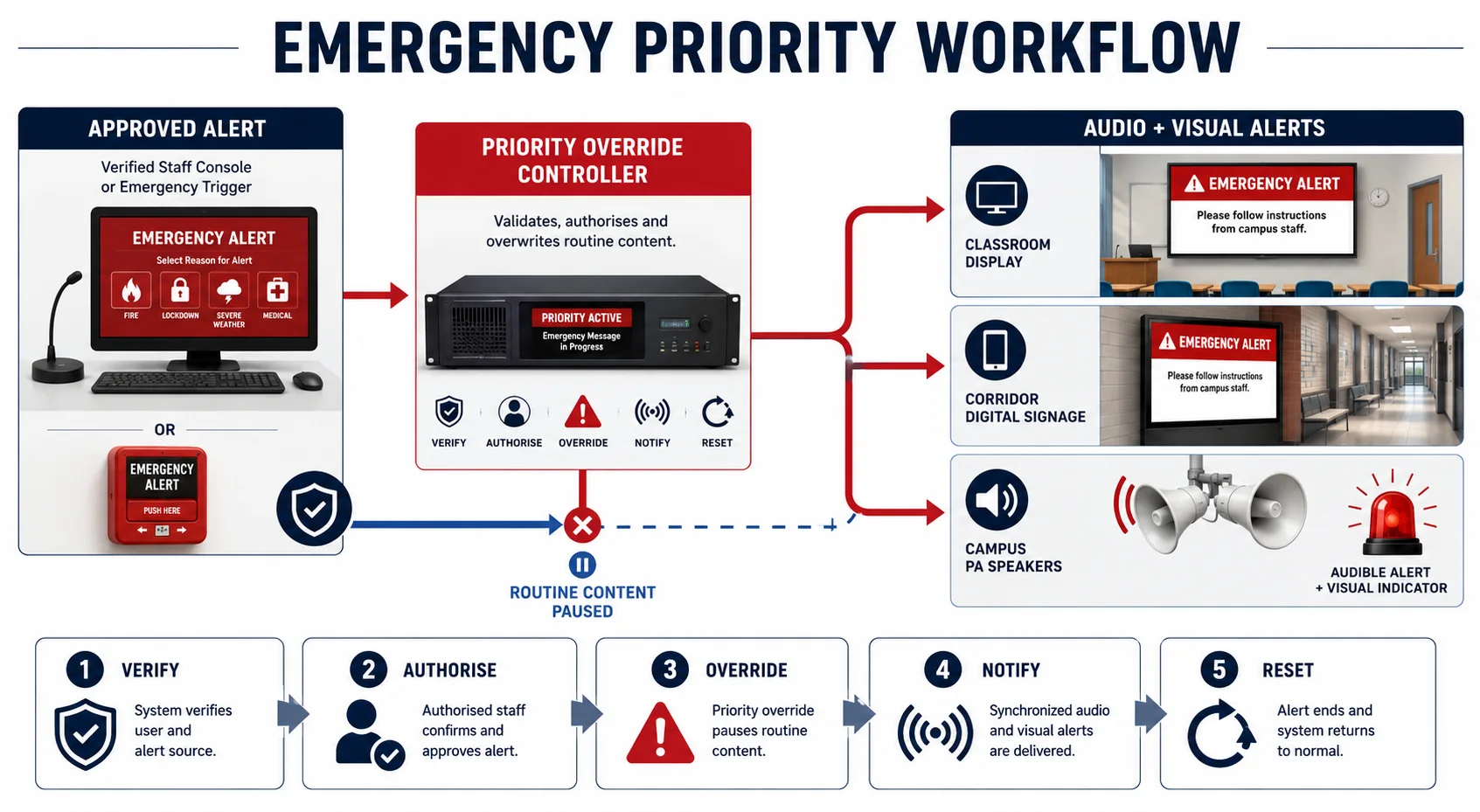
Controlled audio and visual alerts that override routine content according to an approved safety workflow.
Emergency communication must be coordinated with the responsible consultant and applicable project requirements.
Approved live or recorded messages delivered to selected or all zones.
Clear, familiar messages help staff follow the school’s safety procedure.
Used only under authorised procedures, including testing and documented review.
Indoor, outdoor and high-noise areas identified during the site assessment.
Access, triggers and responsibilities are assigned to trained personnel.
PNSS documents interfaces, priorities, monitoring, backup power and acceptance testing.
Safety and voice-alarm scope is confirmed against the project’s consultant, authority and compliance requirements.
Discuss emergency communication ↗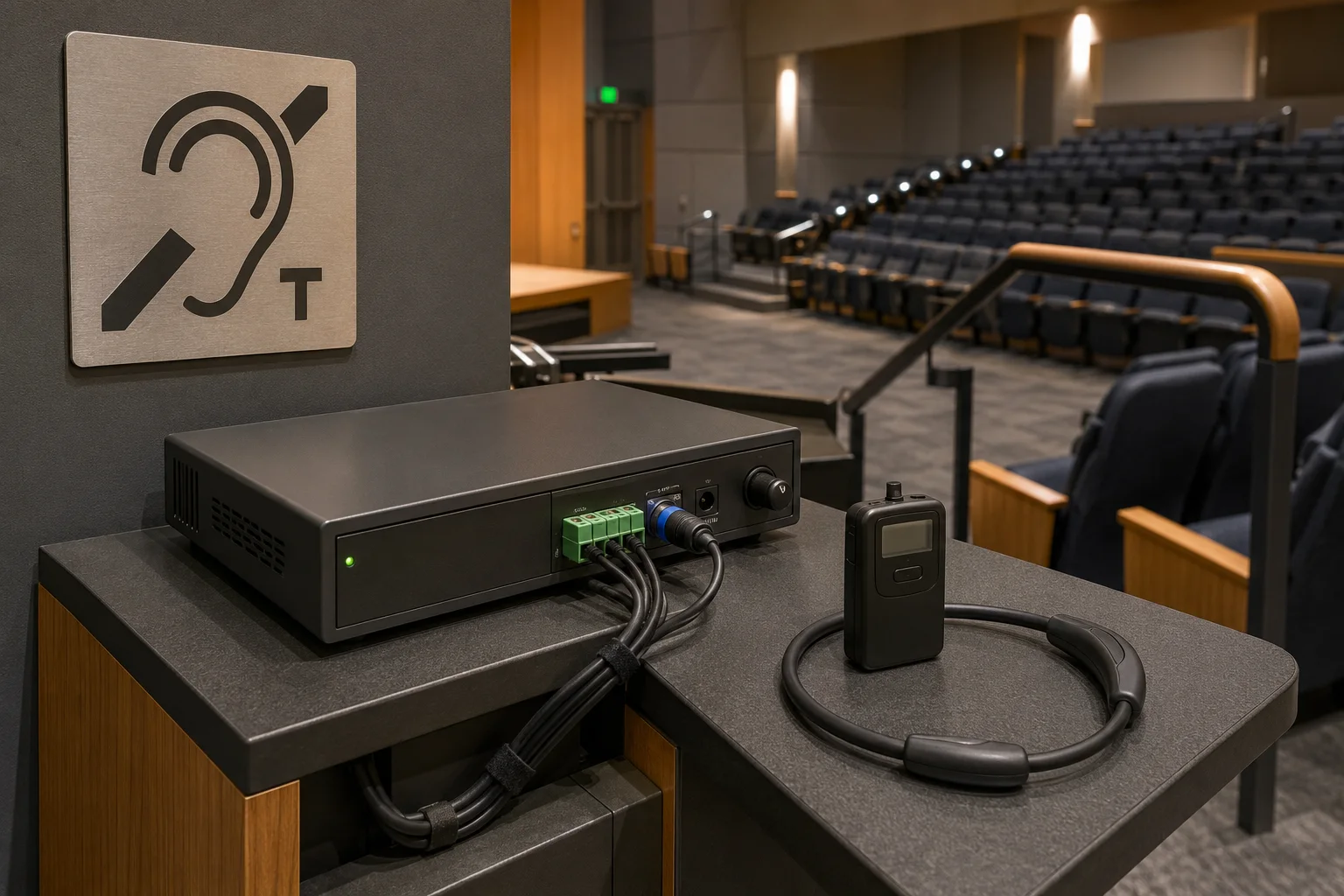
Assistive listening for people who use compatible hearing aids or cochlear implants in counters, rooms and venues.
Coverage geometry and metal loss must be assessed; a standard audio amplifier is not an induction-loop driver.
An assistive listening system transmits approved audio through an electromagnetic field.
Helps reduce the effect of distance, background noise and room reverberation.
For reception, assemblies, lectures, performances and service counters.
Coverage can be localised or room-wide depending on the application.
Facility and support staff also need training to check that the loop is operating.
PNSS coordinates loop layout, driver sizing, audio feed, signage and performance testing.
Induction-loop requirements are also covered in the dedicated Professional Audio solution page.
Explore induction loop design ↗Architecture decision
Start with School bell and time system scheduling when the main need is automated class change and calendar exceptions.
Start with Time distribution system when accurate campus-wide clocks and synchronisation are the priority.
Start with Professional PA system when live paging, zone audio, background music and priority routing are central.
Niche accessibility expertise
PNSS provides project-based hearing-loop design and integration for counters, rooms and venues, including PA/DSP interfaces, loop architecture, site-condition review and IEC 60118-4 commissioning.
One campus, distinct systems
We will separate the bell, clock, paging and safety requirements before proposing integration.