What is a hearing loop or audio induction loop?
A hearing loop, also called an audio induction loop, T-loop or AFIL system, sends audio through a magnetic field so a compatible hearing aid or cochlear implant telecoil can receive the programme directly.
How does a hearing loop improve speech clarity?
Instead of relying only on room loudspeakers, the loop transfers the selected audio signal directly to the user’s telecoil, reducing the effect of distance, room reverberation and competing background noise.
Do all hearing aids work with an induction loop?
A hearing aid or cochlear implant needs an enabled telecoil or T setting to receive the loop directly. Portable loop receivers can also be provided for people who do not use a compatible telecoil device.
Where are induction loops commonly installed?
Typical applications include auditoriums, lecture halls, conference rooms, meeting rooms, houses of worship, reception counters, service points, ticket counters, help points and other public communication areas.
Can a hearing loop connect to an existing PA or AV system?
Yes. The loop driver can receive a suitable feed from microphones, a PA system, DSP, mixer, conference system or other programme source. The signal path and gain structure should be designed as part of the complete audio system.
Why should a hearing-loop driver not be selected only by room size?
Room aspect ratio, loop layout, required current, metal loss, background magnetic noise, seating pattern and overspill requirements all affect the design. Floor area alone is not enough for reliable equipment selection.
What is metal loss in an induction loop system?
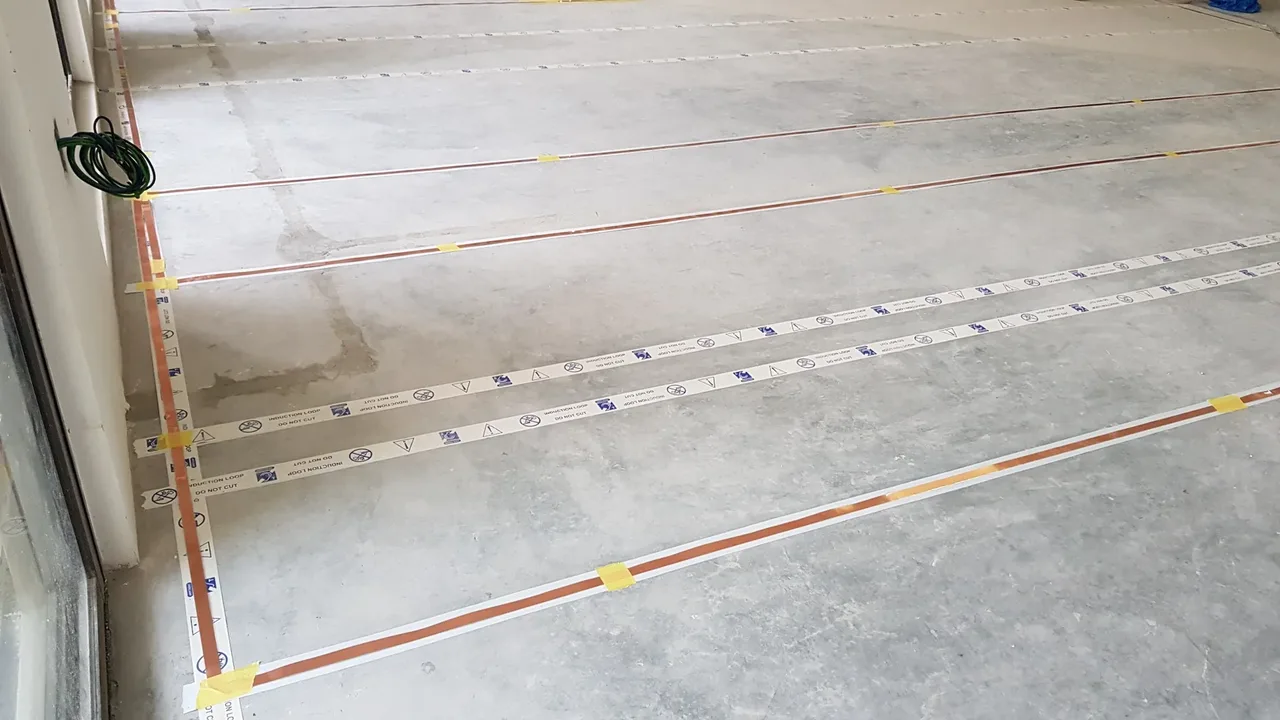
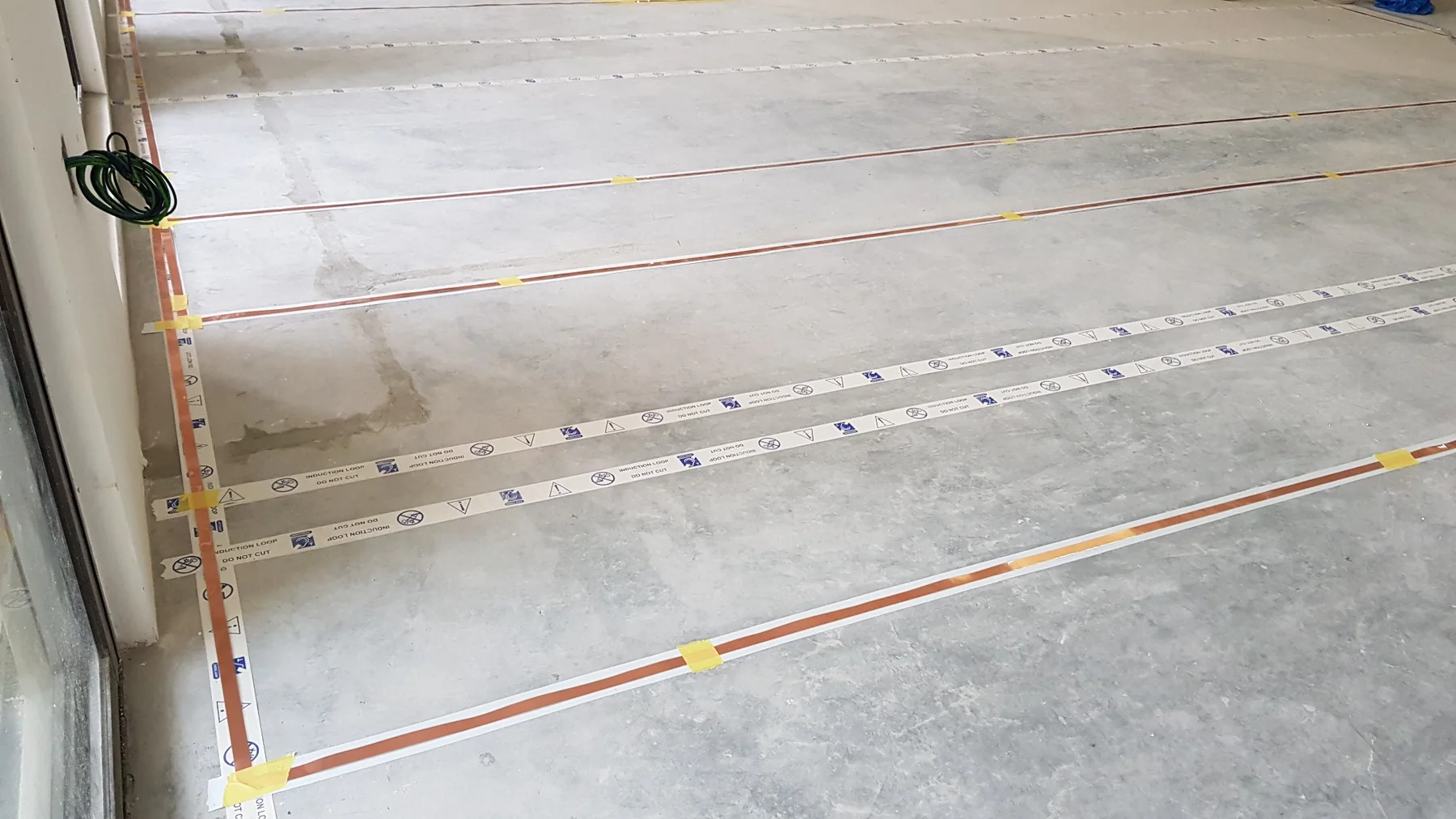
Conductive metal in reinforced concrete, raised floors, ceiling grids and other building structures can weaken and distort the magnetic field, especially at higher frequencies. Site testing and an appropriate loop topology may be required.
What is hearing-loop overspill?
Overspill is the magnetic field extending beyond the intended listening area. It can cause interference with nearby loops and may be undesirable for adjacent rooms or confidential spaces.
What is the difference between a perimeter loop and a low-spill array?
A perimeter loop can be effective for suitable rooms with manageable metal loss and no strict spill requirement. Low-spill or phased-array designs use multiple loop elements to control coverage, compensate for difficult construction and reduce spill into adjacent areas.
Can induction loops be used at reception or service counters?
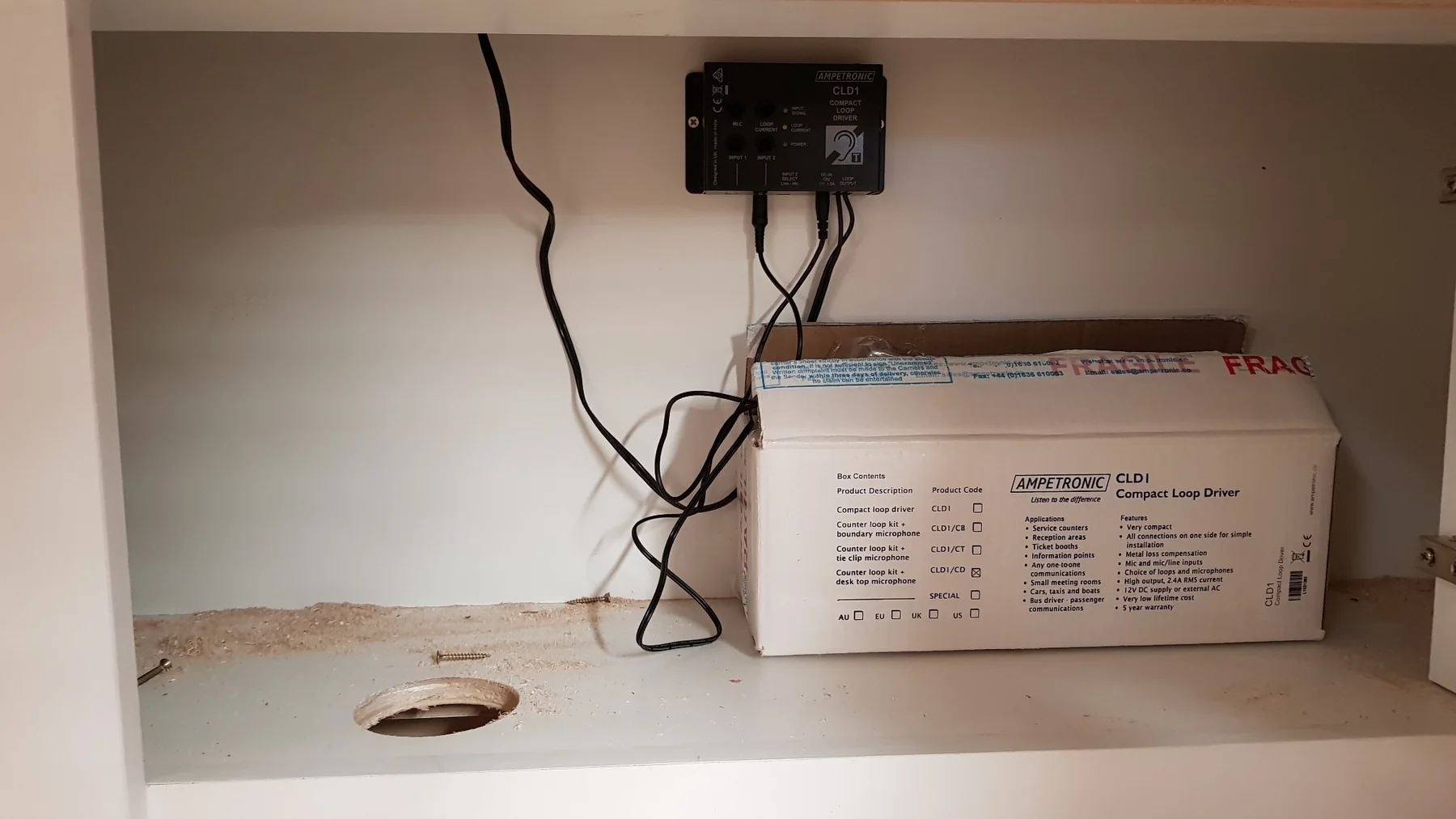
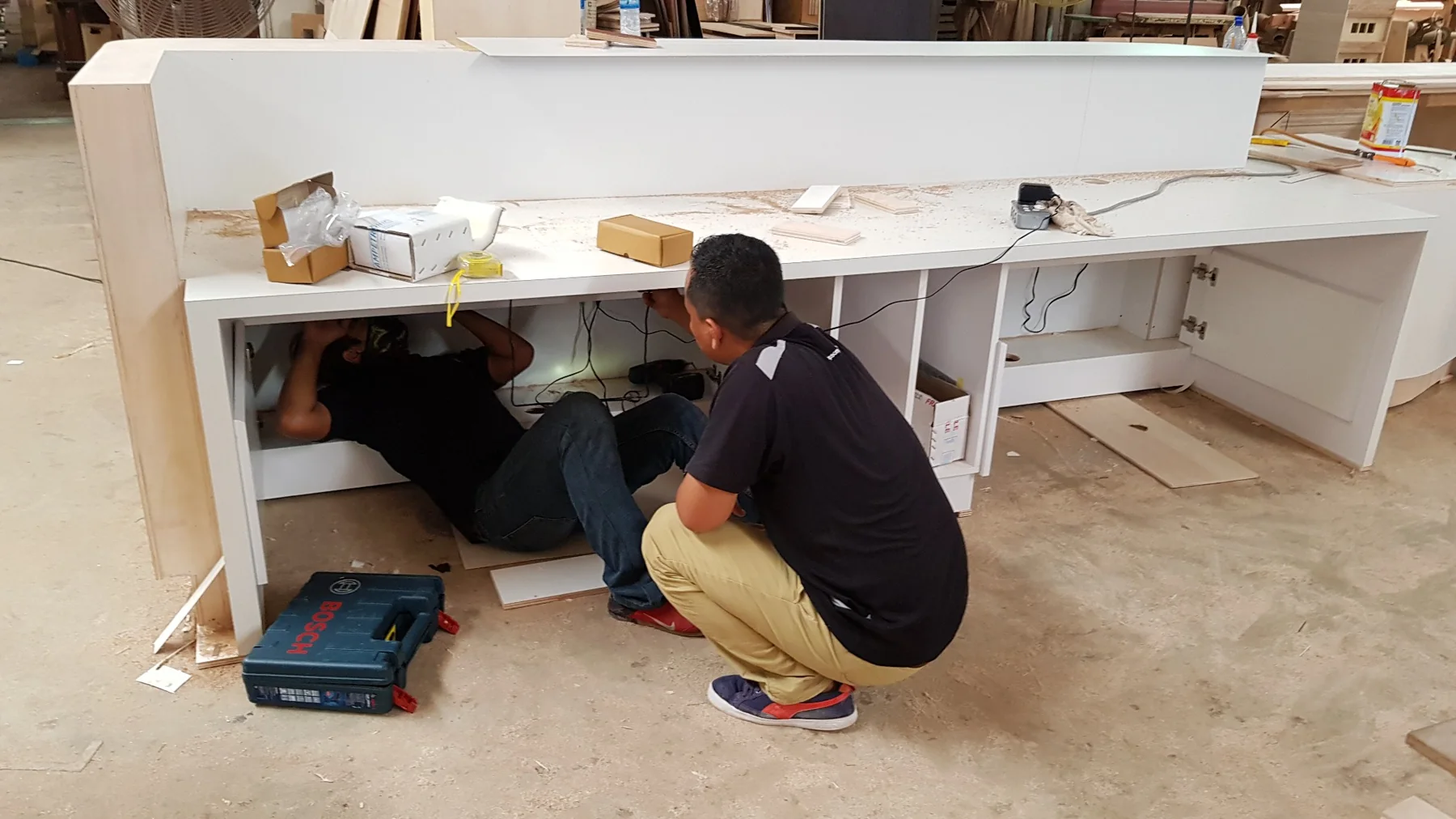
Yes. Compact counter-loop systems can provide localised one-to-one hearing assistance at reception desks, ticket counters, service windows, intercom points and help desks.
How is an induction loop tested after installation?
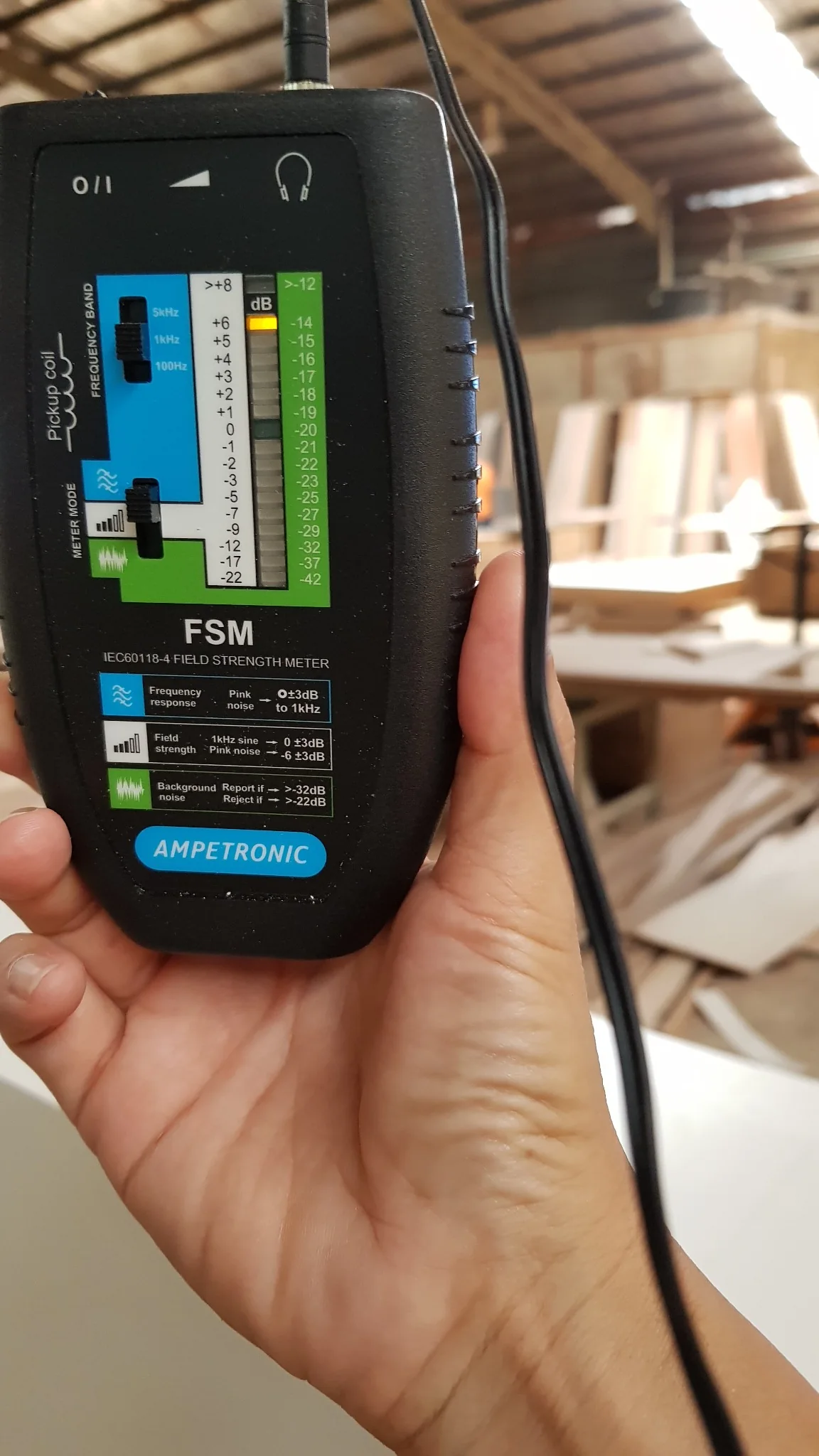
Commissioning uses a calibrated field-strength measuring process to verify magnetic background noise, field strength, frequency response and coverage against the project performance target. IEC 60118-4 is the principal international performance standard used for hearing-loop systems.
What is typically included in an Ampetronic hearing-loop project in Malaysia?
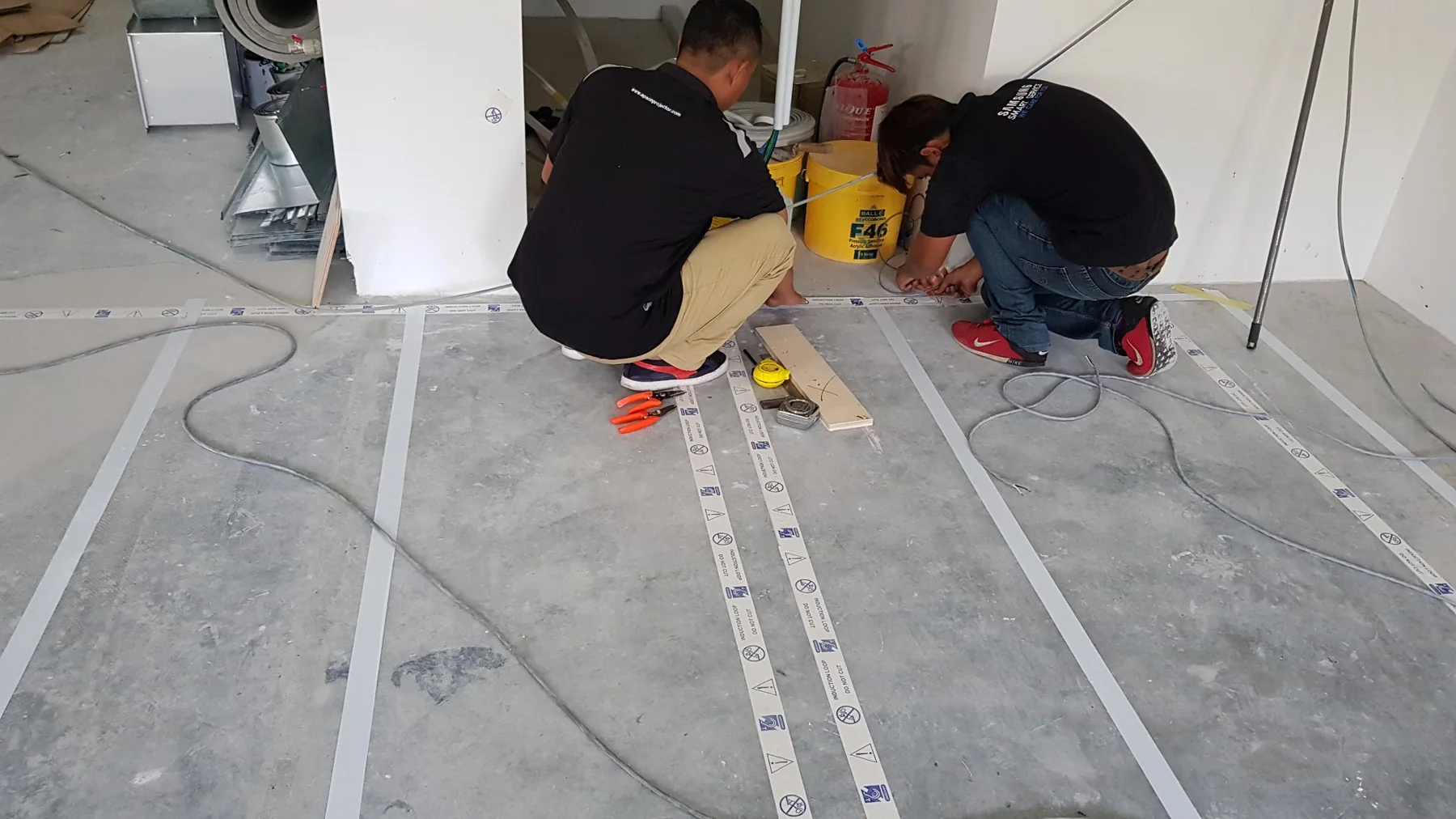
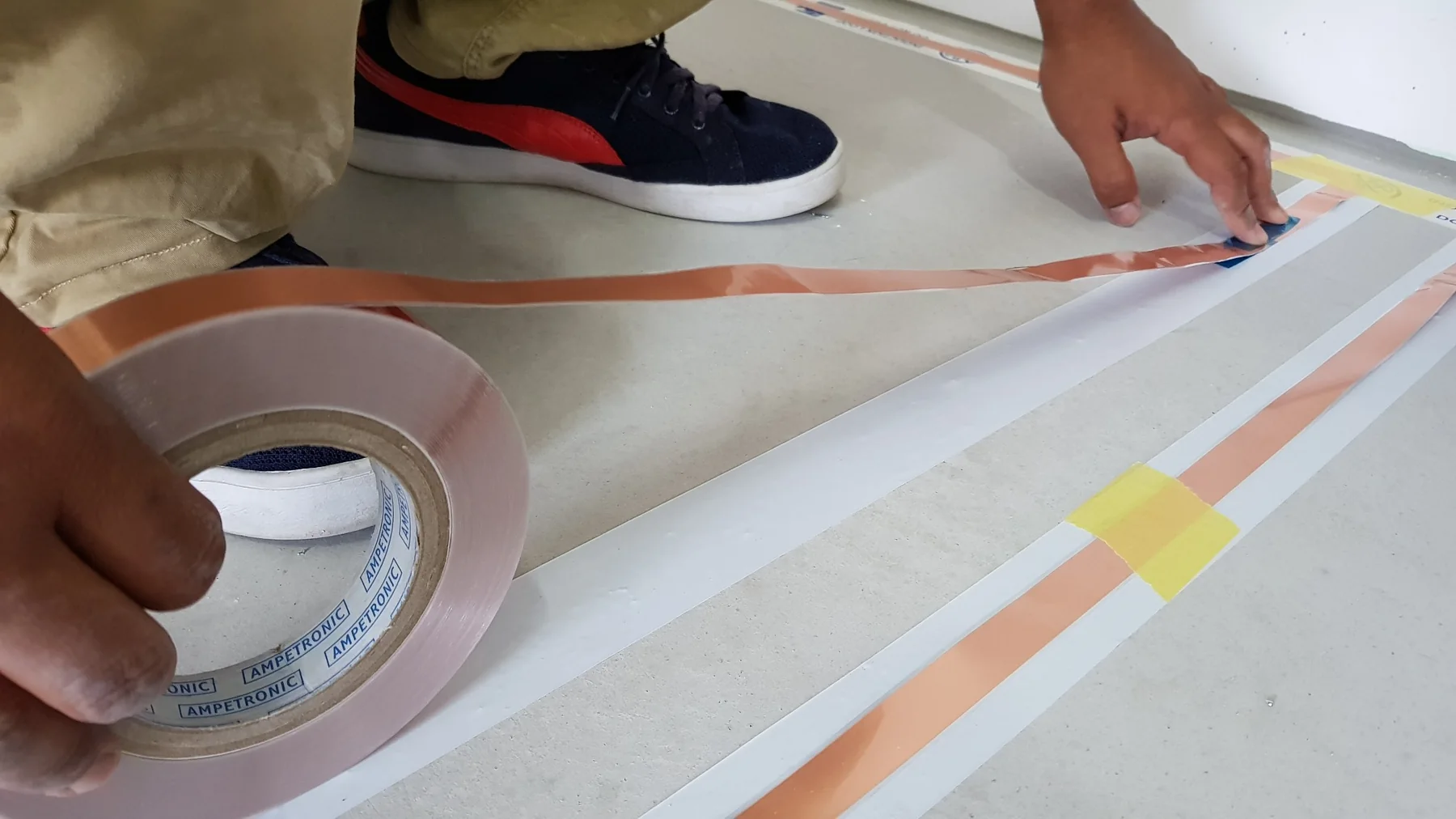
A complete project can include acoustic and coverage planning, loop-driver and topology selection, equipment supply, PA or AV integration, installation coordination, field-strength testing and commissioning. Final model selection depends on room geometry, metal loss, overspill requirements and current product availability.
What information is required to design and quote a hearing-loop system?
Useful inputs include floor plans, room dimensions, floor and ceiling construction, seating layout, adjacent-room information, existing PA or AV equipment, intended audio sources, rack location and any accessibility or consultant requirements.
Is a hearing loop the same as FM, infrared or Auracast?
No. These are different assistive-listening technologies with different receiver requirements, coverage behaviour, privacy characteristics and infrastructure implications. Technology selection should follow the users, room, operational requirements and required coverage rather than assuming one approach suits every space.
What Malaysian hearing-loop project experience supports this guidance?
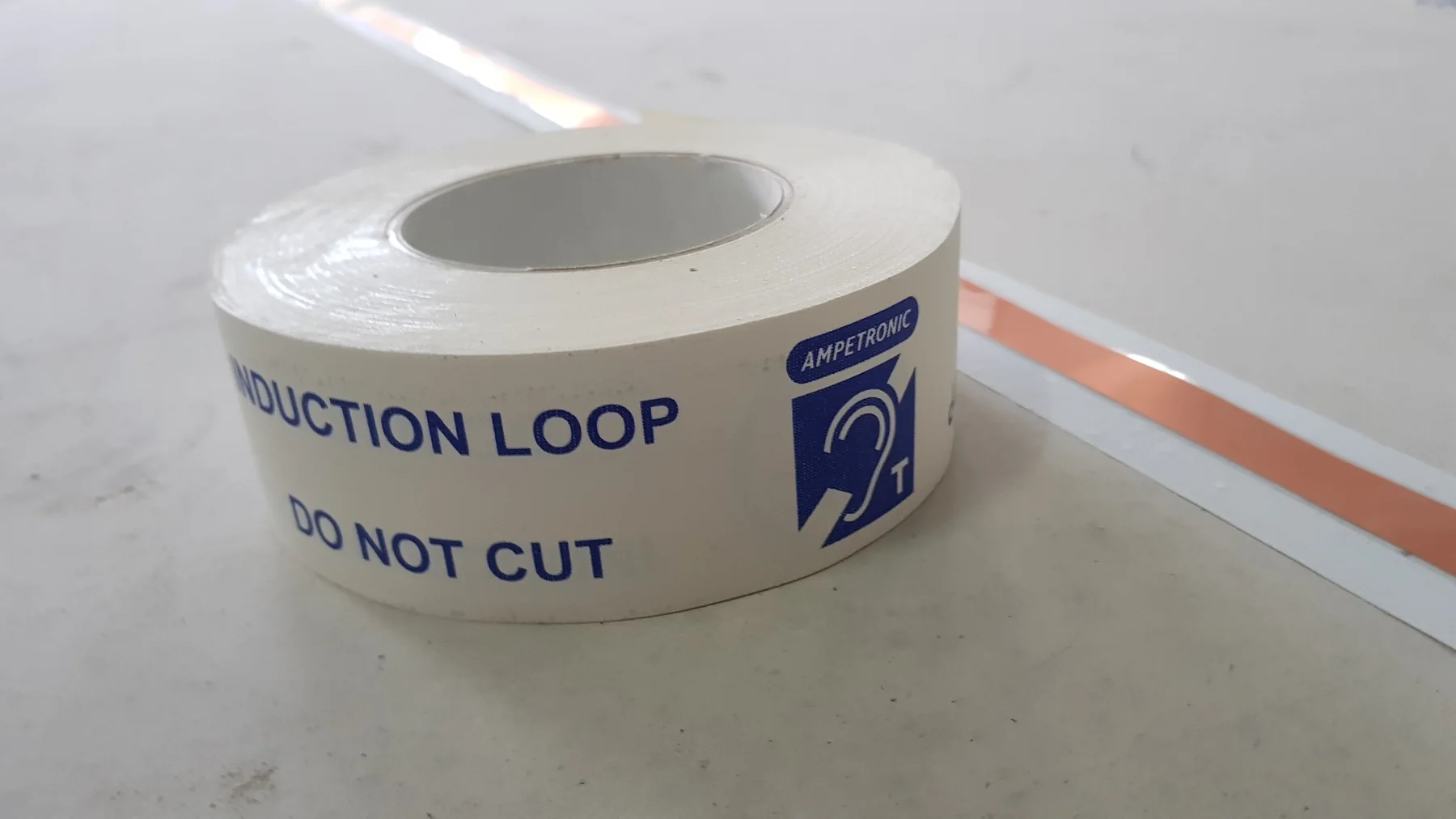
PNSS has Malaysian project experience with an Ampetronic MLD5 low-spill MultiLoop system and CLD1 service-point loops, including installation, field-strength testing, commissioning and later diagnostic and remedial support. The customer identity is withheld from the public case reference.
Can an existing induction-loop system be tested, diagnosed and recommissioned?
Yes. A service scope can include field-strength and array diagnostics, background-noise checks, fault investigation, cabling or system reconfiguration and post-work verification. The exact approach depends on the installed system and site condition.
What is a Telecoil or T-coil in a hearing aid?
A Telecoil, or T-coil, is a small magnetic receiver built into some hearing aids and compatible hearing-implant sound processors. When the T / Telecoil / Loop programme is active, it can receive the magnetic audio signal from a hearing-loop system.
Does a person need to wear a T-coil separately?
Usually no. The T-coil is normally built into the compatible hearing aid or sound processor. The user selects the appropriate T / Telecoil / Loop programme when entering a loop-enabled listening area.
When is a Telecoil particularly useful?
It is particularly useful when speech becomes difficult because of distance, background noise, room reverberation or a physical barrier, such as in lecture theatres, meeting rooms, auditoriums, houses of worship, reception counters and public-service points.
What are the main advantages and limitations of a hearing loop?
Advantages include direct access to the intended audio through the user’s own compatible hearing device, no Bluetooth pairing for a Telecoil user and support for multiple users in an area loop. Limitations include Telecoil compatibility, electromagnetic background noise, metal loss, overspill and the need for correct design, signage, testing and commissioning.
Can a person with a pacemaker or ICD use a hearing loop?
Ampetronic states that it has no evidence that normal hearing-loop magnetic fields interfere with pacemakers and recommends a precautionary 150 mm (6 in) separation between loop cable and pacemaker. People with pacemakers, ICDs or other implanted electronic medical devices should still follow their device manufacturer’s instructions and healthcare professional’s advice.
Can a cochlear implant work with a hearing loop?
Some cochlear-implant sound processors support Telecoil or room-loop reception. Compatibility and activation depend on the specific sound processor and clinician configuration, so the user should confirm this for their own device.
Do I need a hearing aid to use an induction loop?
No. A person with a compatible Telecoil can receive the loop directly through their own hearing device. A person without a compatible T-coil can use an appropriate portable induction-loop receiver with headphones where the venue provides one.
What is a portable loop receiver?
A portable loop receiver is a handheld device that receives the magnetic audio signal from an induction-loop system and converts it to an audio output for headphones. It can provide hearing-loop access without relying on a Telecoil built into the listener’s own hearing device.
What is the difference between a Telecoil and a portable loop receiver?
A Telecoil is normally built into a compatible hearing aid or implant sound processor. A portable loop receiver is a separate venue-issued device that receives the same loop signal and outputs the programme through headphones.
What are the Ampetronic ILR3 and ILR3+ used for?
The ILR3 is an audio hearing-loop receiver for listening through standard stereo headphones. The ILR3+ is intended to make regular system checks easier as well, including confirming that the loop is working and that field strength is at an appropriate level for users.
Is a portable loop receiver the same as a field strength meter?
No. A portable receiver is primarily a listening and operational-checking device. Professional field-strength meters and Loopworks Measure tools are used for quantitative measurement, setup and commissioning against the project performance criteria.