Zone-based audio distribution
Sources, paging microphones, routing, amplification, loudspeakers and supervision.

Complete professional audio signal path
PNSS designs public address, DSP, assistive listening, installed pro sound and conferencing audio around speech intelligibility, coverage, control and dependable operation.
More than a mixer
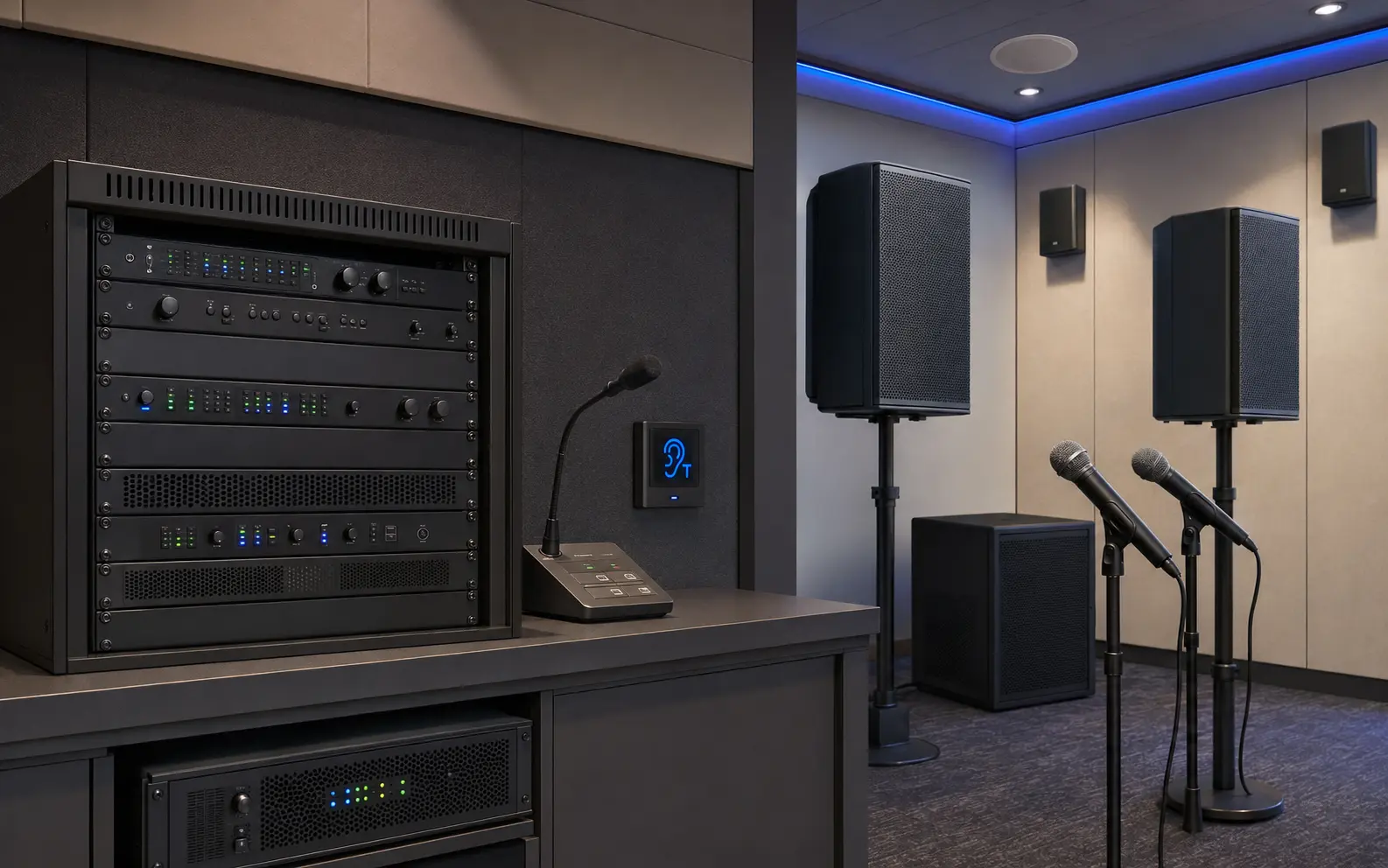
A PA system distributes announcements. A DSP manages routing and processing. An induction loop provides assistive listening. Pro sound reinforces programme and performance audio. Conference audio supports two-way conversation. PNSS may integrate them, but each requirement is designed and tested separately.
Live, scheduled and priority audio delivered to the correct zones with suitable coverage and control.
Sources, paging microphones, routing, amplification, loudspeakers and supervision.
Information reaches the intended areas without unnecessary disturbance elsewhere.
Routine paging, background music, events and approved priority messages.
Schools, offices, retail, factories, public facilities and multi-building sites.
Controls and priority levels are assigned to appropriate roles.
PNSS selects zones, speaker type, amplifier capacity, routing and user controls.
For school-specific separation of School bell and time system, Time distribution system and Professional PA system, use the dedicated system guide.
Open the PA product guide ↗Routing, mixing, automixing, equalisation, echo cancellation, control and monitoring tailored to the room.
A DSP manages audio paths, levels, logic, echo control and user interfaces.
Correct processing improves intelligibility, consistency and system control.
For conference rooms, training spaces, halls and networked audio systems.
Central or distributed processors connect microphones, codecs, amplifiers and controls.
Users receive simple presets while technical staff retain deeper diagnostics.
PNSS develops the signal flow, control logic, presets, naming and commissioning records.
DSP selection depends on analogue and network I/O, AEC channels, control needs and future expansion.
Discuss DSP requirements ↗Audio-frequency induction loops send speech and programme audio directly to compatible hearing devices.
Loop driver and cable transmit the audio signal to a compatible hearing aid or implant.
Direct transmission can improve speech clarity for users with hearing loss.
At counters, meeting rooms, lecture halls, venues and houses of worship.
The coverage pattern is designed around the listening area and adjacent spaces.
Users need clear signage; staff need a simple routine for system checks.
PNSS coordinates loop geometry, driver capacity, audio feed and performance testing.
A normal loudspeaker amplifier cannot substitute for a correctly designed induction-loop driver.
Discuss an induction loop ↗Sound reinforcement for speech, music and programme content across stages, halls and multi-purpose venues.
Inputs, mixing, processing, amplification and loudspeaker coverage for the venue.
The audience should hear speech and programme evenly without excessive level.
For live speech, music, playback and multi-purpose venue operation.
Indoor and selected outdoor spaces requiring controlled sound reinforcement.
The system supports both occasional users and trained technical operators.
PNSS coordinates loudspeaker position, system tuning, control and safe operating presets.
Product choice follows audience area, programme type, acoustic conditions and operator skill level.
Discuss pro sound ↗Microphone pickup, echo control, room loudspeakers and conferencing integration for natural conversation.
Microphones, DSP and loudspeakers connect the room to the video-conference platform.
Good audio often determines whether a hybrid meeting feels productive.
For huddle rooms through boardrooms, training spaces and classrooms.
Design follows seating, room acoustics, camera view and presentation workflow.
Both sides need clear speech, natural level and minimal echo or distraction.
PNSS maps pickup, playback, echo paths, platform interfaces and user controls.
For room-specific Logitech camera and controller selection, use the dedicated room guide.
Open the video room guide ↗Audio acceptance
Listeners receive suitable level and tonal balance across the intended area.
Speech remains understandable under normal room and background-noise conditions.
Users can select the correct source, zone and preset without unsafe complexity.
Design the signal path
PNSS will map sources, zones, users, acoustic conditions and operational priorities before recommending products.