Designed for room and venue coverage
C Series powers a professionally designed hearing loop so compatible users can receive the programme through their T / telecoil setting.

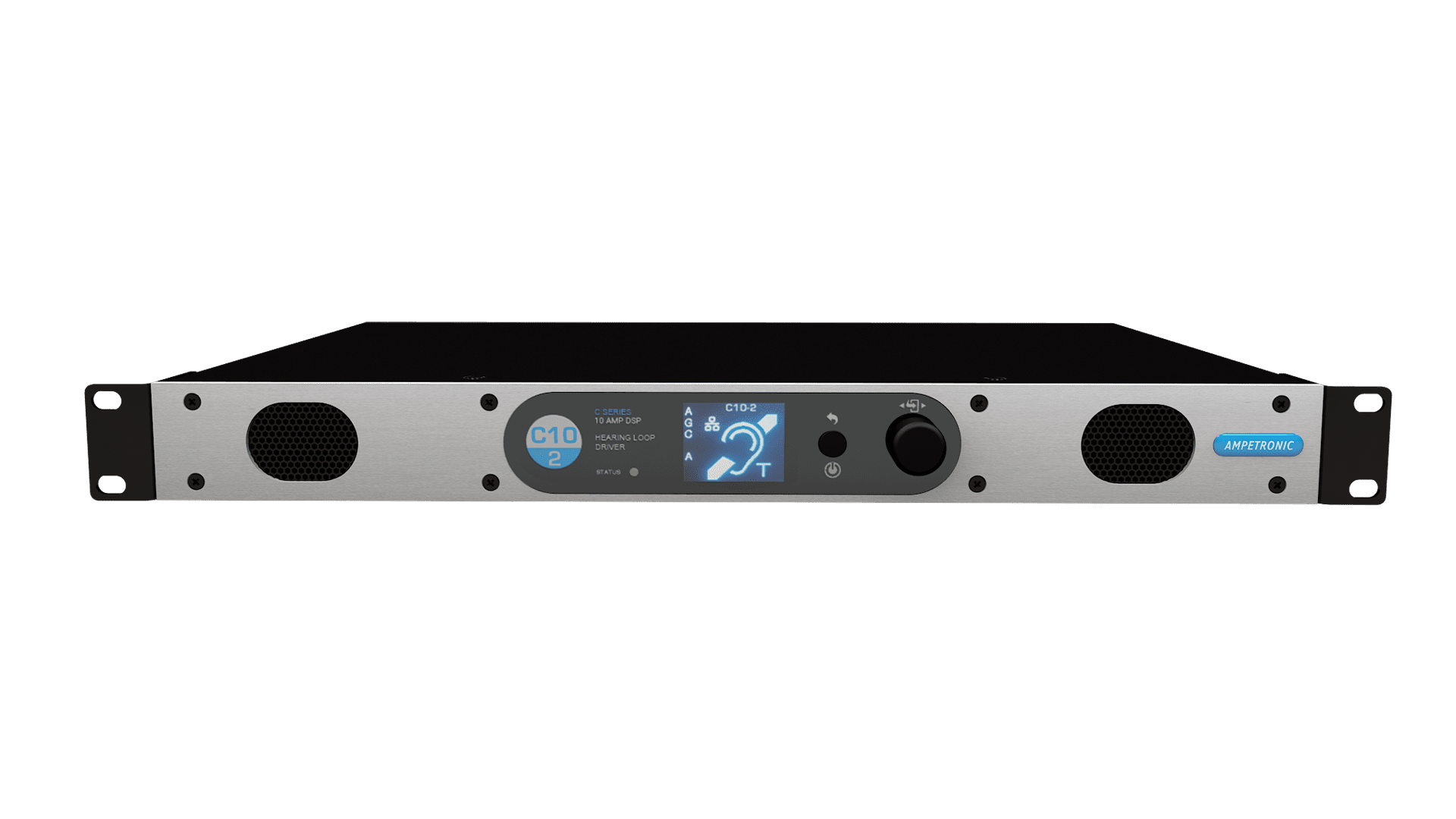
Official Ampetronic C10-2 visual used as a representative C Series product image. C Series models vary by channel count and output.
Ampetronic · Networkable Hearing Loop Drivers
Networkable hearing-loop driver family for assistive-listening systems, spanning perimeter and MultiLoop models with remote monitoring, diagnostics and DSP-based setup.
See how it works
A hearing loop turns microphone or programme audio into a magnetic signal that a compatible hearing device can receive.
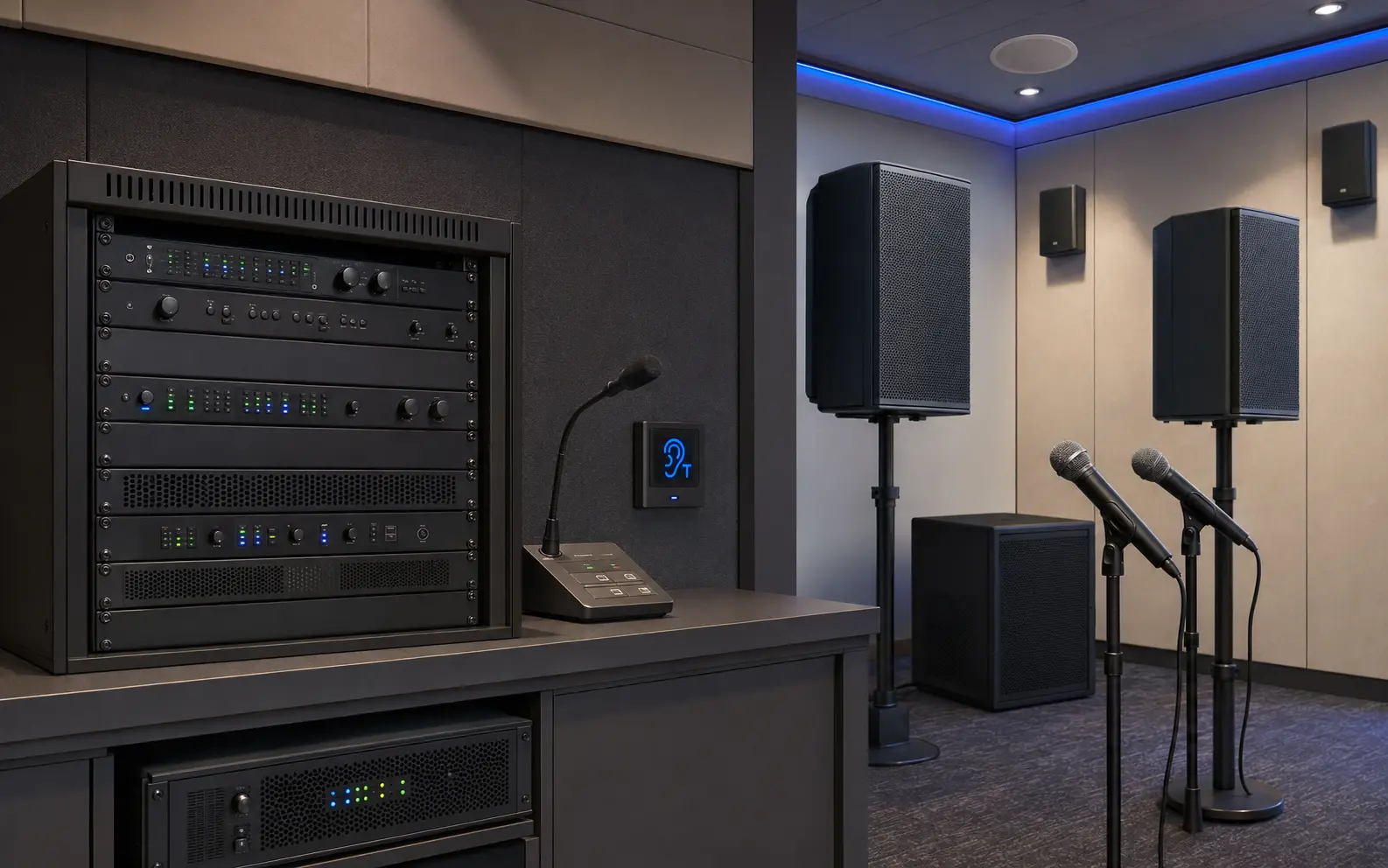
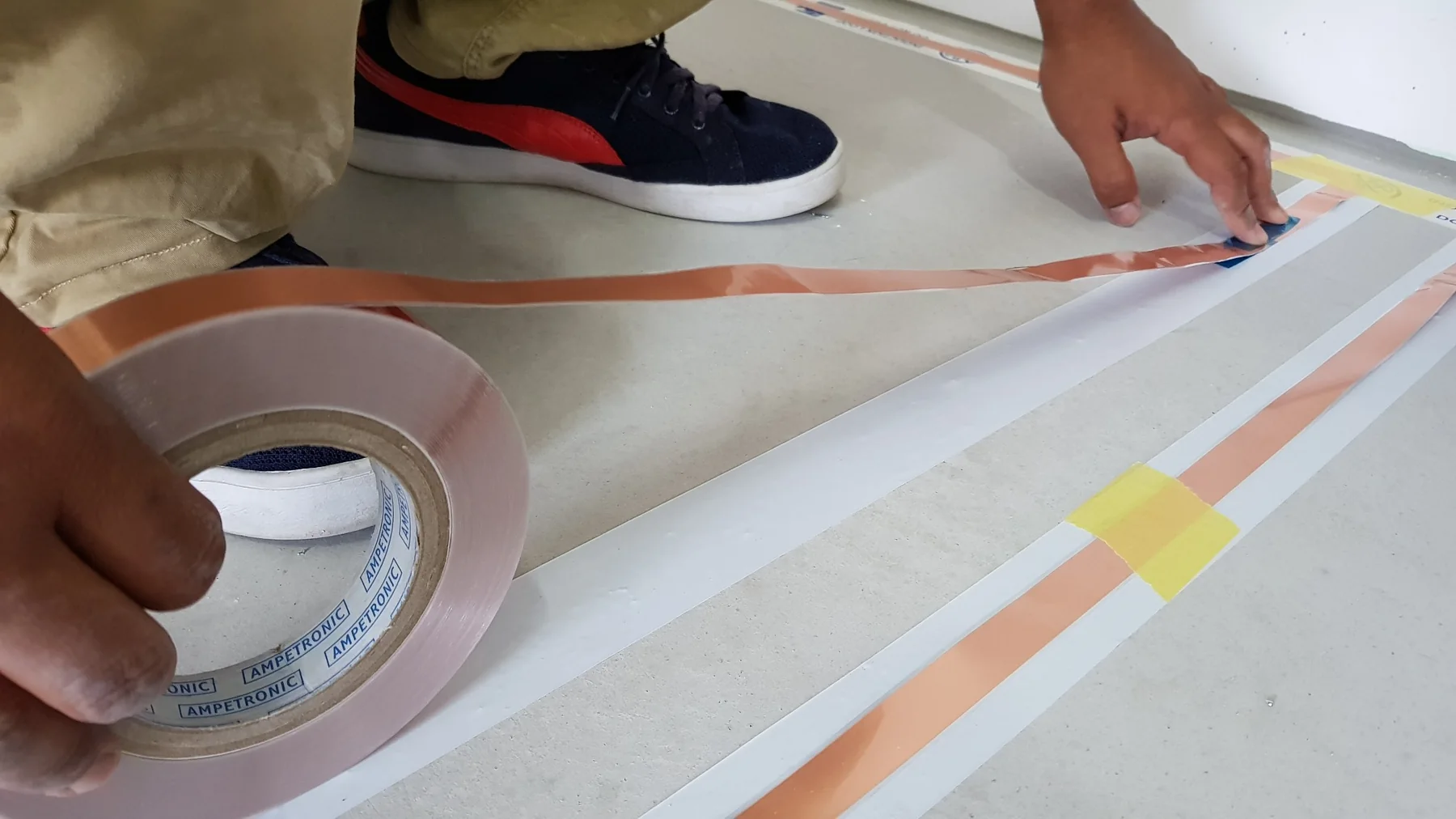

Not every hearing device has an enabled telecoil. Portable receivers can provide another access option, while normal loudspeakers continue to serve the general audience.
Selection guidance
C Series powers a professionally designed hearing loop so compatible users can receive the programme through their T / telecoil setting.
Network models support remote status, adjustment and fault reporting for facilities, AV and service teams.
Test tones, indicators and diagnostics help trained teams commission the system and maintain reliable operation.
The driver alone does not guarantee performance. Loop layout, site conditions, installation and IEC 60118-4 commissioning all matter.
Technical reference
| System type | Audio-frequency induction / hearing-loop driver family |
|---|---|
| Perimeter models | C5-1 5A · C7-1 7A · C10-1 10A |
| MultiLoop models | C5-2 5A · C7-2 7A · C10-2 10A · C14-2 14A |
| Networking | Networked models support browser-based remote reporting, adjustment and fault monitoring |
| Rack format | 1U 19-inch rack format |
| Standards context | Designed as part of systems intended to meet IEC 60118-4; correct loop design and commissioning are essential |
Applications
Before choosing a model
No. The hearing aid or cochlear implant needs an enabled T / telecoil programme. A portable receiver can be considered for visitors without one.
Usually, yes. The hearing loop is the assistive listening channel for compatible users; the PA or room audio system continues to serve the general audience.
No. Loop layout, room shape, building metal, spill control, audio inputs and the required listening coverage all affect the design and driver choice.
Continue exploring
Design context
Use the PNSS hearing-loop authority pages to assess metal loss, overspill, loop geometry, counter applications and commissioning before finalising the C Series model.
System dependencies
A product is only one part of the deployment. Confirm the supporting components and infrastructure before final model selection or installation.
Dependency links are planning paths, not automatic compatibility claims. Exact model/SKU, interfaces, loading, firmware/software and accessories must be verified for the final project.
Drive / coverage
Match driver topology and room design to the required coverage.
Open related area →Test / user access
Plan commissioning, verification and user-access equipment.
Open related area →System design
Coordinate loop layout, input source, metal loss, spill control and commissioning.
Open related area →Product family navigation
Return to Induction Loop & Assistive Listening, continue to the relevant solution, or open a selection guide without losing product context.
New project / active selection
Use the parent family and solution links to compare application fit. Current Malaysia availability, exact SKU, warranty terms and compatible accessories should be verified at quotation stage.
Existing installed product
Already installed? Identify the exact model and condition first, then verify lifecycle, parts/software support and the practical repair or migration path.
Open legacy & replacement support →Share the room, intended listening area and audio source. PNSS can assess the loop design before a driver model is selected.