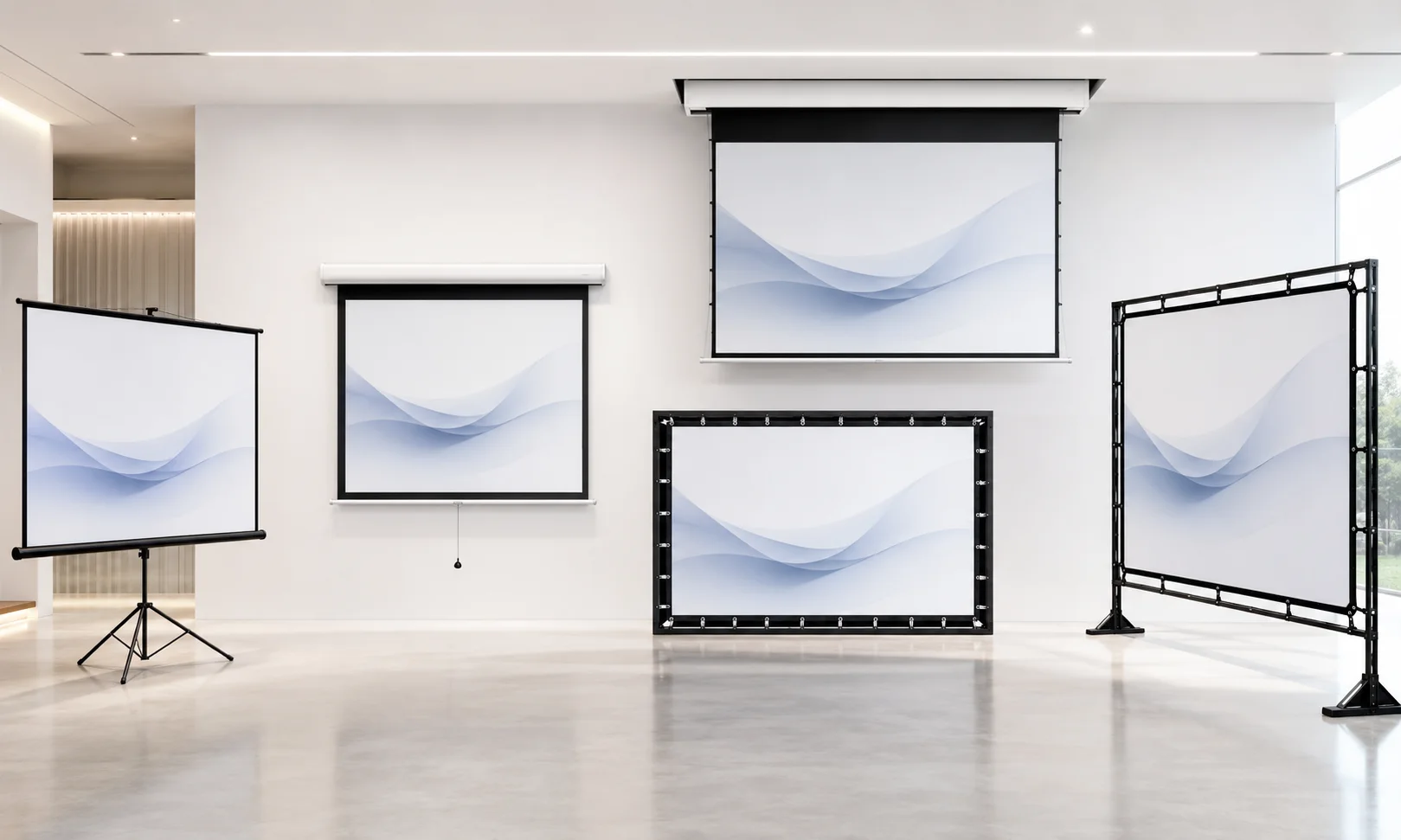
This guide explains what each screen type does, why it is used, where it fits and which installation conditions must be verified.
Product visual. Final screen type, size, surface, supporting structure and control method are confirmed against the room and audience.
Selection before model
Six applications, six different priorities.
Image width, audience distance, aspect ratio, projector light output, ambient light, mounting, control and surface behaviour determine the right screen family.
01 · Portable
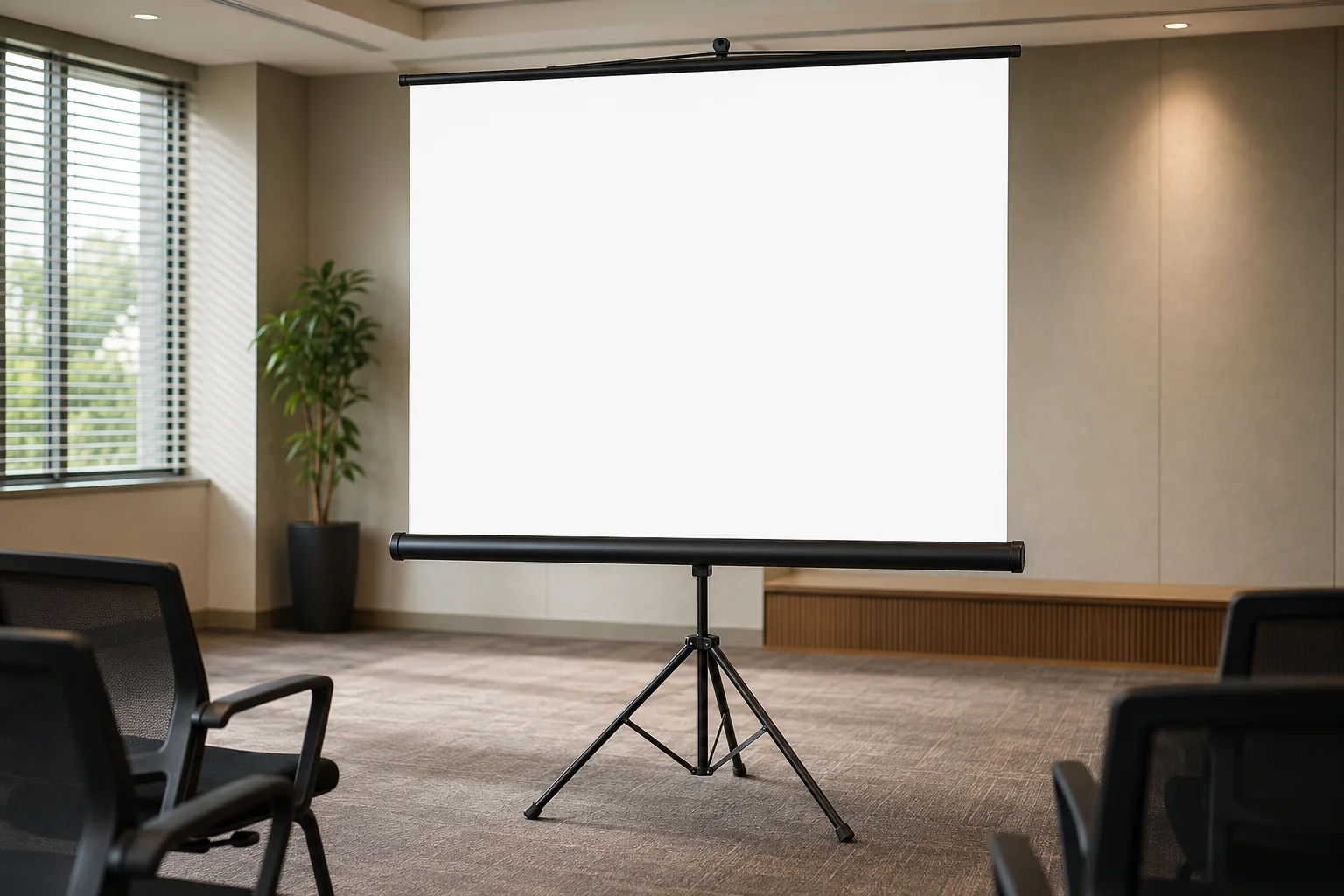
Tripod & pull-up screens
For movable, occasional-use projection where permanent fixing is unsuitable.
WhatSelf-supporting screen stored and moved between rooms.WhyQuick deployment without wall or ceiling work.WhenTemporary presentations, training or events.WhereSmall rooms and flexible spaces with level floors.WhoOperators able to transport, set up and store it safely.HowCheck diagonal, aspect ratio, stability, case size and storage route.
02 · Manual
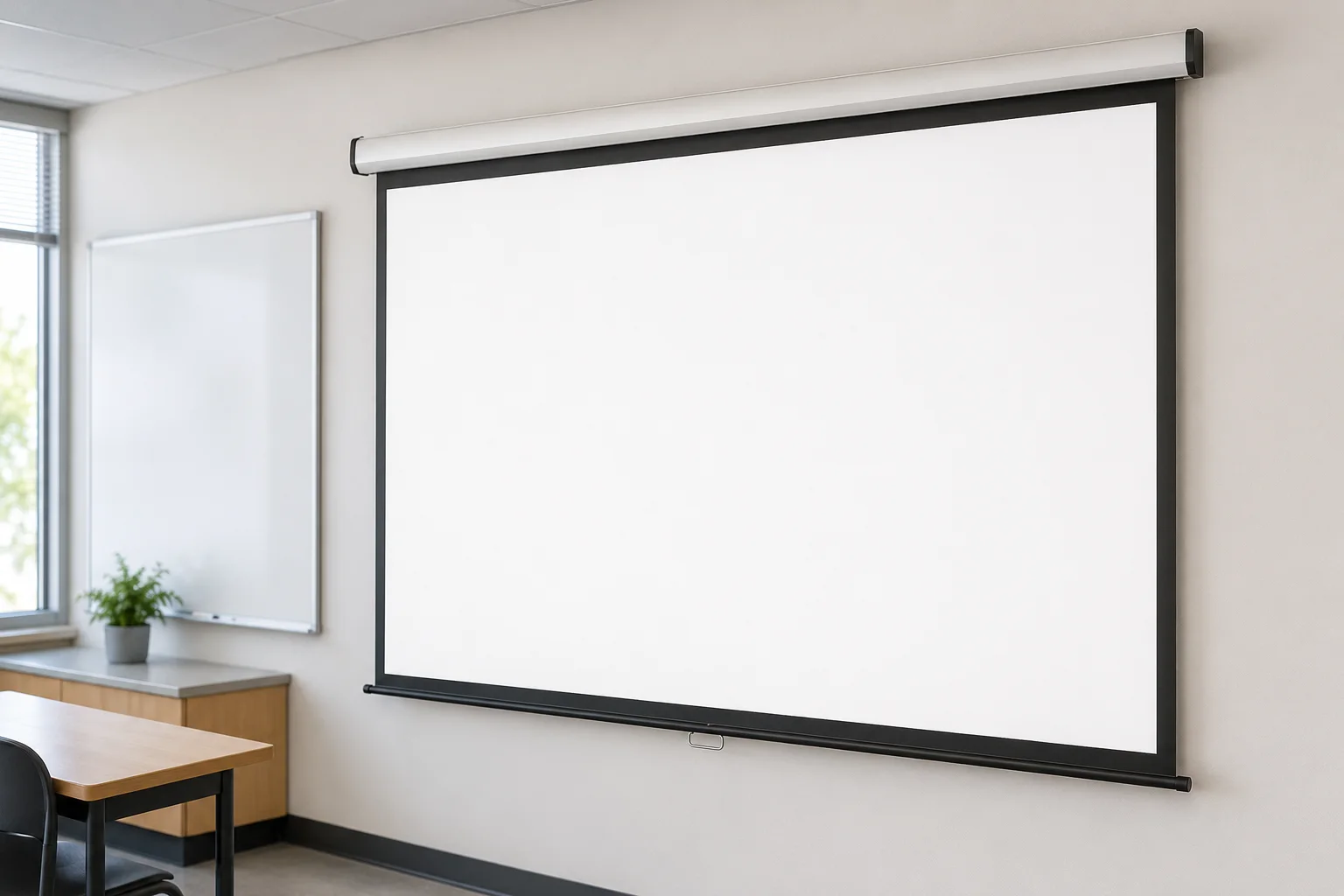
Manual pull-down screens
For straightforward permanent installations with modest usage frequency.
WhatWall- or ceiling-mounted retractable screen operated by hand.WhyLower complexity with no electrical control.WhenBudget and simple operation take priority.WhereClassrooms, training rooms and smaller meeting rooms.WhoUsers who can reach and operate the pull mechanism correctly.HowCheck fixing points, drop length, retraction and clearances.
03 · Motorised
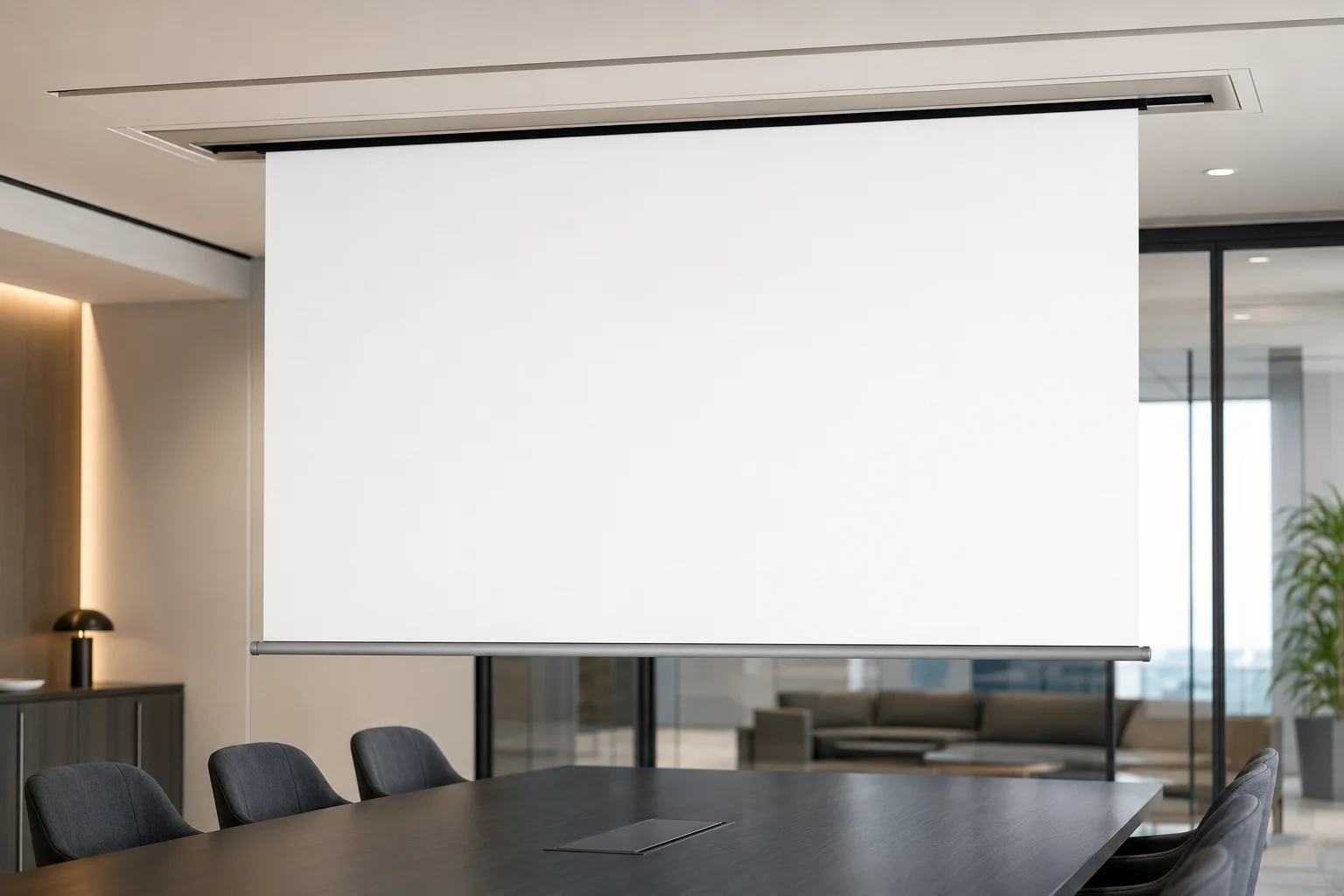
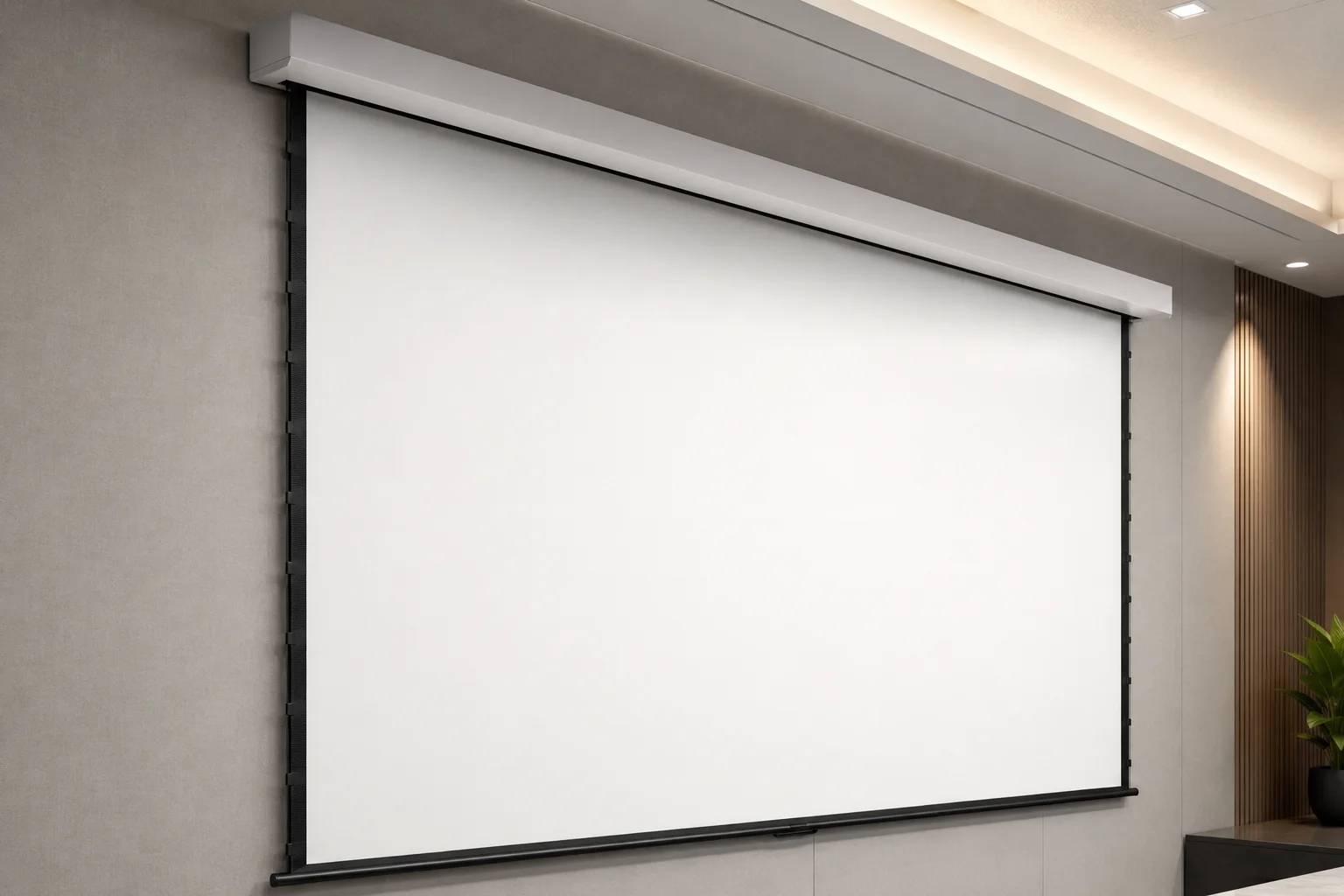
Motorised & recessed screens
For frequent operation, clean room integration and control-system coordination.
WhatPowered screen with switch, remote, trigger or automation interface.WhyConsistent deployment and easier user operation.WhenThe screen is used daily or must hide when not required.WhereMeeting rooms, halls, classrooms and auditoriums.WhoAV users, facilities and maintenance teams.HowCoordinate power, control cable, casing, ceiling access and limits.
04 · Surface flatness
Tab-tensioned screens
For applications where improved flatness supports detailed widescreen content.
WhatRetractable screen with lateral tension maintaining the viewing surface.WhyReduce edge curl and visible surface distortion.WhenFine text, high resolution or wide images are important.WhereBoardrooms, presentation suites and quality-focused installations.WhoUsers needing retractability without sacrificing surface flatness.HowMatch fabric, gain, format, top drop and viewing angle.
05 · Large portable
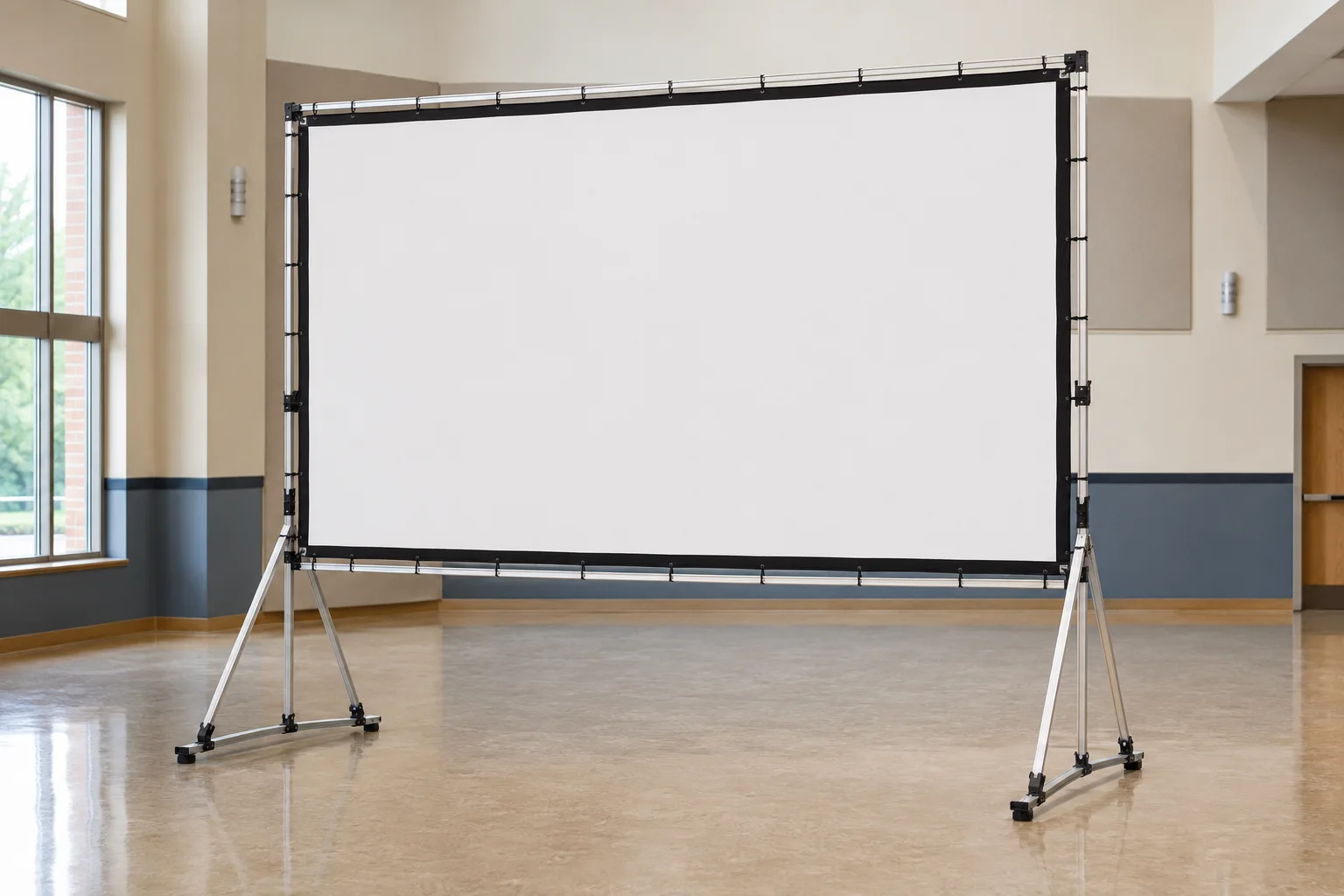
Fast-fold & large mobile screens
For demountable large images in event, staging and multipurpose environments.
WhatFramed screen assembled on legs or a mobile support system.WhyLarge viewing area without permanent building installation.WhenEvents, temporary halls and changing layouts.WhereBallrooms, multipurpose halls, stages and outdoor-covered areas.WhoTrained setup crews with adequate handling and storage.HowCheck access doors, case transport, assembly area, ballast and sightlines.
06 · Engineered application
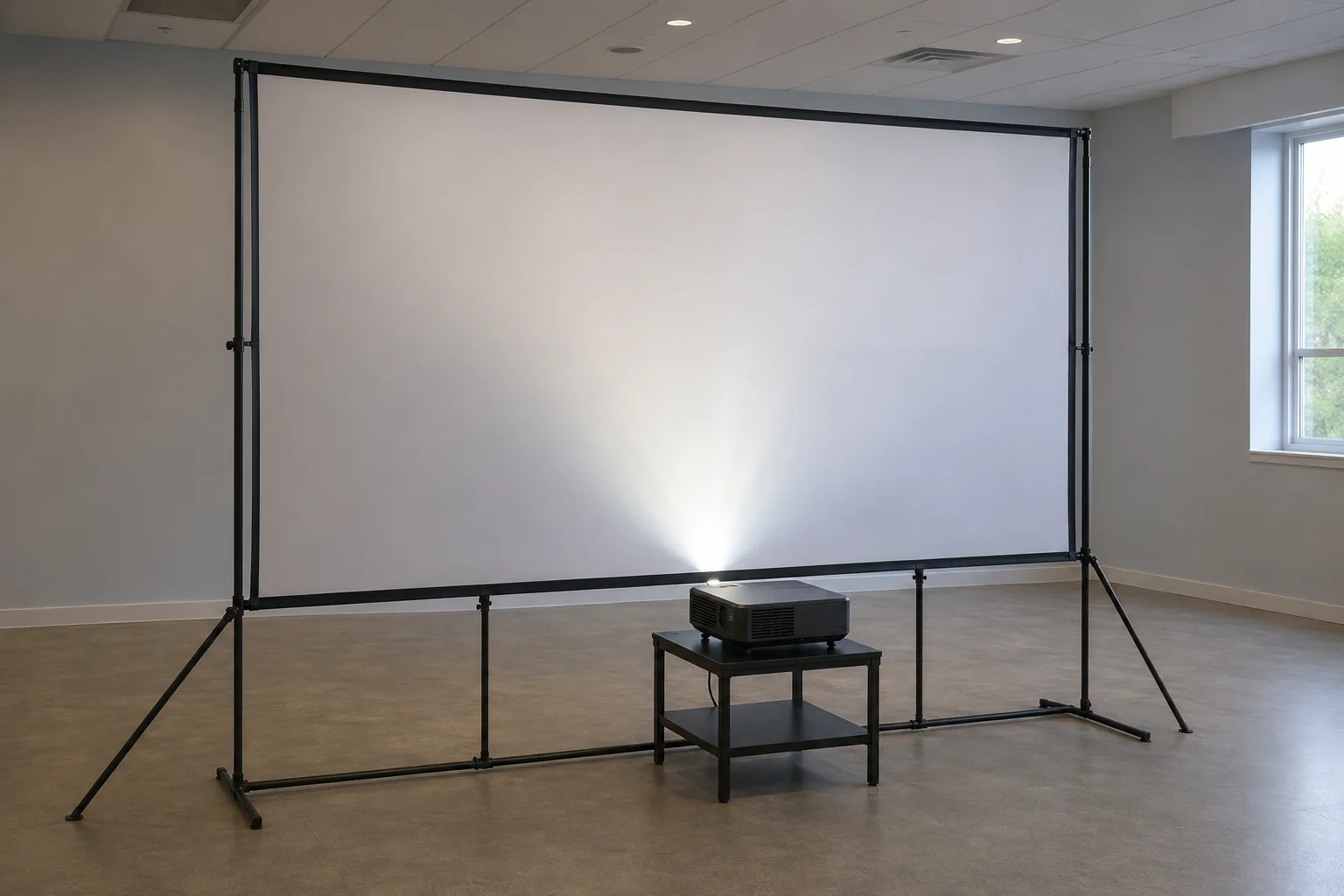
Large motorised & rear-projection screens
For large venues or layouts requiring projection equipment behind the image plane.
WhatLarge-format retractable or rear-projection surface with engineered support.WhyServe large audiences or keep equipment out of audience space.WhenStandard screen sizes, structures or front-throw layouts are unsuitable.WhereAuditoriums, stages, control spaces and specialist simulations.WhoIntegrator, building team and qualified structural stakeholders.HowEngineer casing support, fabric tension, throw space, access, limits and safety.
Projection screen range
PNSS provides portable, manual, motorised, tab-tensioned, fast-fold, large-format and rear-projection screen options. Final screen material, size, casing and control method are confirmed against the room, audience and projector.
Information PNSS needs
Send the room, audience and projector details.
Include room dimensions, seating distance, image format, projector model, light conditions, mounting location, ceiling access and control preference.
Prepared by PNSS Tech using project and integration experience together with referenced manufacturer documentation. Product availability, compatibility and project-specific requirements are validated during engineering and quotation.