
Artificial intelligence, integrated AV platforms and smart building technologies are becoming important investments for companies, schools and public-sector organisations. The strongest projects do not chase features in isolation; they connect technology choices to operational outcomes and long-term support.
1. AI is becoming standard in professional AV
Professional AV is moving beyond standalone displays and projectors. Camera intelligence, cloud management, monitoring, automation and AV-over-IP are increasingly used to simplify operation and improve reliability.
2. Meeting rooms are becoming smarter
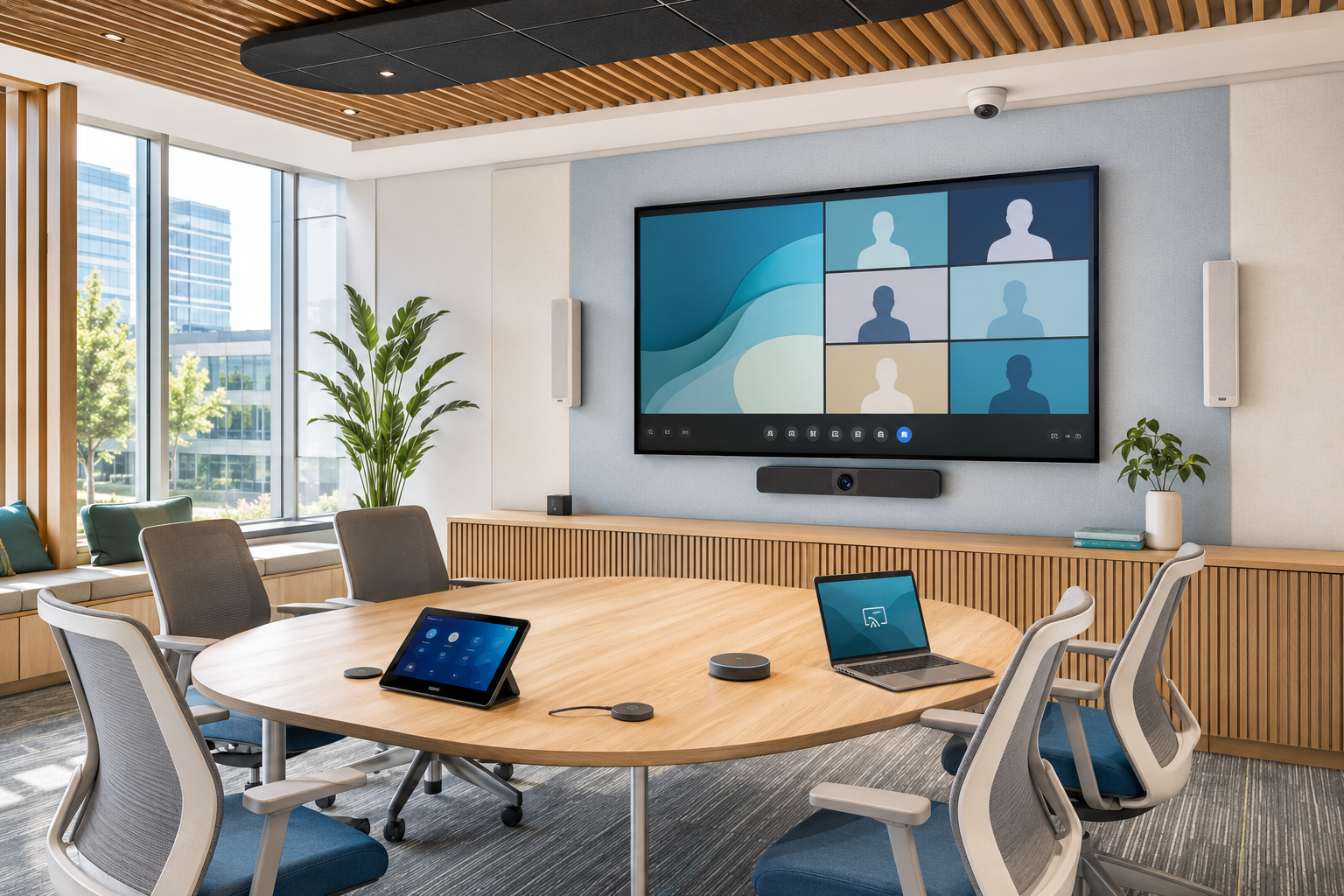
Modern collaboration rooms may include camera tracking, automatic speaker framing, intelligent audio, meeting summaries and centralised device management. These tools can reduce setup time and improve the experience for both in-room and remote participants.
A successful room is still defined by fundamentals: camera position, microphone coverage, sightlines, acoustics, lighting, network infrastructure and ease of use.
3. Smart buildings are moving beyond security
Organisations increasingly want CCTV, access, visitor management, signage, energy monitoring, room booking and control centres to contribute to a unified operational view.
- Faster incident awareness and response
- Better visibility across rooms, floors or multiple buildings
- More efficient use of equipment and energy
- Central reporting for management and technical teams
4. Smart classrooms support digital learning
Interactive displays, wireless presentation, classroom audio, lecture capture, hybrid learning cameras and campus signage can improve engagement when they are reliable and easy for teachers to operate.
5. AI automation is driving productivity
AI can assist with customer service, sales follow-up, reporting, appointment scheduling and internal knowledge. The most practical implementations automate repetitive administrative work while keeping employees responsible for decisions and sensitive commitments.
6. Connected technology requires stronger security
Deepfakes, highly personalised scams, browser-based deception and AI-generated misinformation make verification and approval procedures increasingly important. Connected AV, CCTV, smart building and command centre systems should be included in cybersecurity planning rather than treated as isolated equipment.
- Use multi-factor authentication where supported
- Apply least-privilege access and strong approval controls
- Keep platforms patched and maintain reliable backups
- Train users to verify unusual requests and suspicious links